
Vitamin D and B12: food, sunlight and when to get tested

The short answer
Vitamin D (for bones and muscles) and vitamin B12 (for nerves and blood) deficiencies are common in India. Vitamin D comes mainly from sunlight on your skin, and B12 mainly from milk, curd, paneer, eggs, fish and meat, so vegetarians who eat little dairy are at higher risk. Common signs include tiredness, aches, tingling or numbness. Don't take high-dose supplements on your own; ask a doctor whether you need a blood test first.
This guide covers everyday habits. It doesn't replace your doctor's advice. Take vitamin supplements only as your doctor advises.
Vitamin D
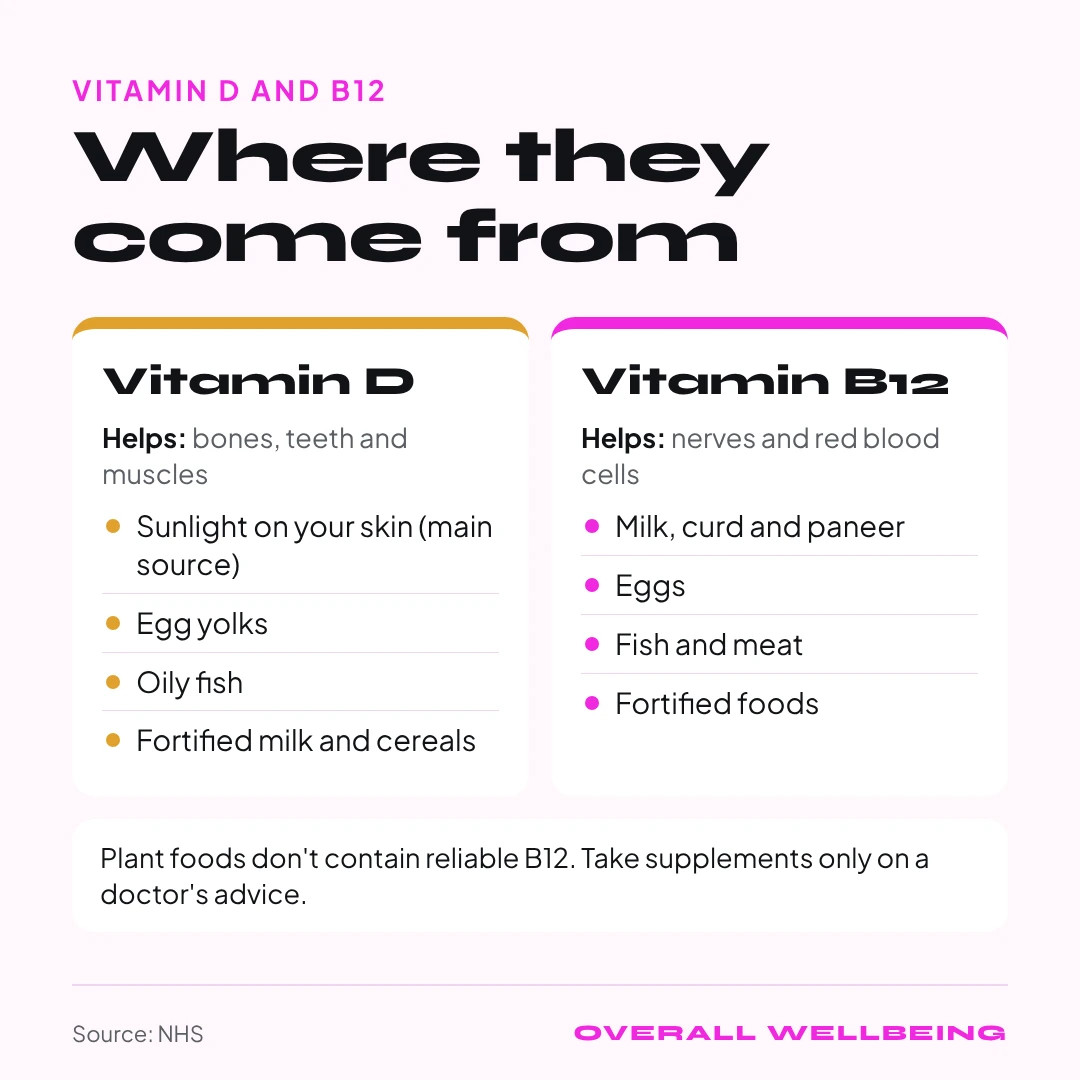
What it does: helps your body use calcium for strong bones, teeth and muscles. Too little can cause bone pain and weak muscles.
Where it comes from:
- Sunlight: your skin makes vitamin D when it's in sunlight. People with darker skin, which includes most South Asians, need more sun exposure to make enough, and many Indians get little sun because of indoor work, covered clothing, pollution or sunscreen.
- Food (small amounts): egg yolks, oily fish such as sardines and mackerel, and fortified foods such as some milks and cereals.
Who is at higher risk: people who spend most of the day indoors, cover most of their skin outside, have darker skin, are older or housebound.
Vitamin B12
What it does: keeps nerves healthy and helps make red blood cells.
Where it comes from: milk, curd, paneer, cheese, eggs, fish and meat, and fortified foods. Plant foods generally don't contain reliable B12.
Who is at higher risk: strict vegetarians who eat little dairy, vegans, older adults, people with certain stomach problems, and people taking some long-term medicines (for example, some acid-reducing medicines). Ask your doctor if this applies to you.
Signs of B12 deficiency: extreme tiredness, pins and needles, a sore red tongue, mouth ulcers, muscle weakness, memory problems or low mood. Untreated, some nerve problems can become permanent, so don't ignore these symptoms.
Habits that help
Beginner
- Get regular daylight. Spend time outdoors with some skin uncovered; avoid strong midday sun long enough to burn.
- Include dairy daily if you're vegetarian: milk, curd, buttermilk or paneer.
- Eat eggs or fish a few times a week, if you eat them.
Intermediate
- Choose fortified foods where available, such as fortified milk or cereals; check the label.
- Ask your doctor about testing if you have symptoms or risk factors. Don't guess from symptoms alone.
Advanced
- Don't self-prescribe high-dose supplements. High-dose vitamin D sachets and capsules (such as the 60,000 IU weekly packs common in India) should only be taken on a doctor's advice. Too much vitamin D can raise calcium levels and harm the kidneys and heart.
Common myths
- "Sitting by a closed window gives me vitamin D." Glass blocks most of the sunlight your skin needs.
- "Vegetarians always have B12 deficiency." Not always; regular dairy helps a lot. But risk is higher, so testing is worth discussing.
- "More vitamin D is always better." Too much can be harmful.
Try this today
Spend a little time outdoors in daylight with your face and arms uncovered, and include milk, curd or paneer in one meal.
When to see a doctor
See a doctor if you have ongoing tiredness, bone or muscle pain, muscle weakness, pins and needles, numbness, a sore tongue or memory problems; if you're a strict vegetarian or vegan; if you're pregnant; or before starting any vitamin supplement.
Common questions
How do I know if I have vitamin D deficiency?
Only a blood test can confirm it. Ask your doctor if you have symptoms or risk factors.
What vegetarian foods have B12?
Milk, curd, paneer, cheese and fortified foods. Plant foods alone usually aren't reliable sources.
How much sun do I need for vitamin D?
It varies with skin colour, season, time of day and location. Regular time outdoors with some skin uncovered helps; avoid burning.
Sources
- Vitamin D — NHSstrong
- Vitamin B12 or folate deficiency anaemia — NHSstrong
Part of these Essentials
Related guides
In the same area of life
Healthy Indian diet plan for everyday life
Dietary variety
Nutrient-dense food intake
Fruit and vegetable intake
How much protein you need, with Indian vegetarian sources
Healthy dietary fat sources
Complex carbohydrate quality
Adequate dietary fiber
Build a calm, personal practice
Explore more of the framework, or open your personal Wellbeing space to focus on what matters most right now.