
How much protein you need, with Indian vegetarian sources
The short answer
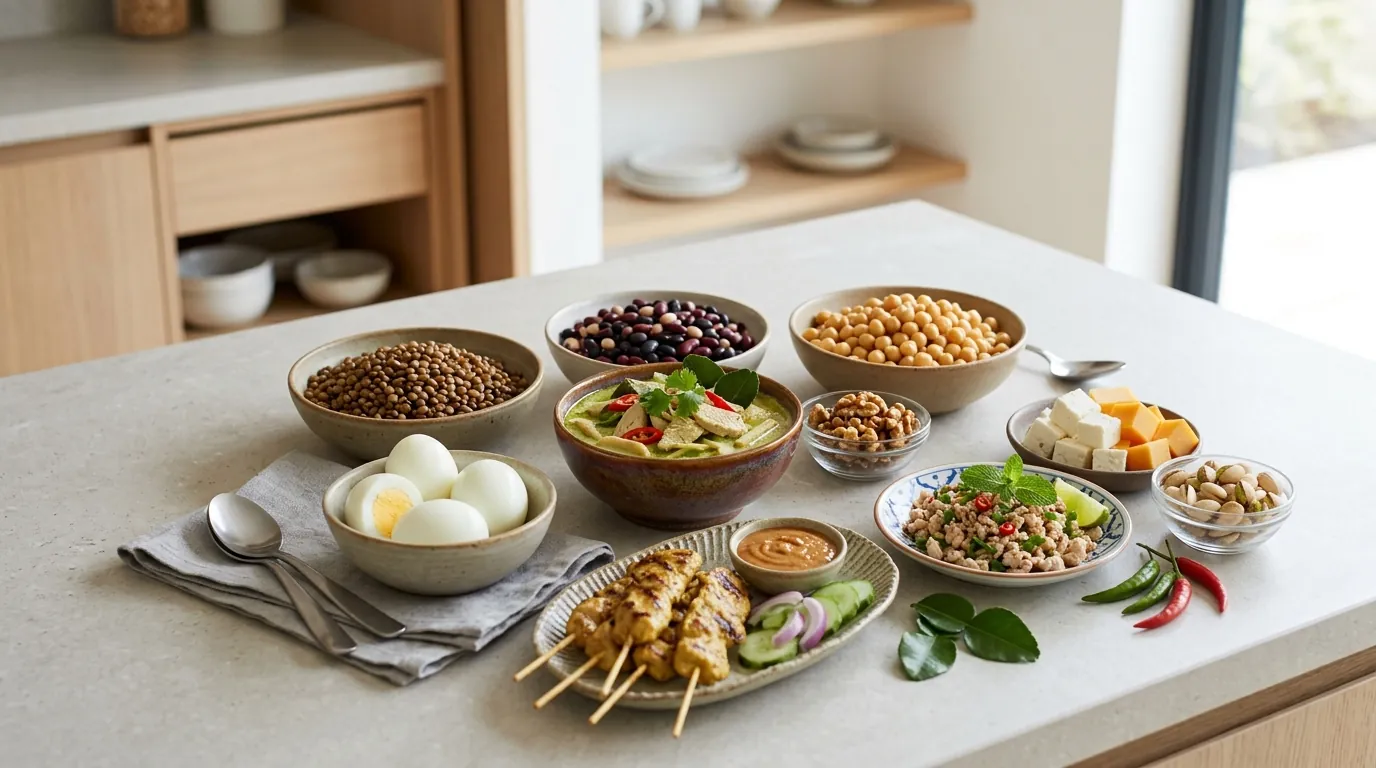
ICMR-NIN recommends about 0.83 g of protein per kg of body weight per day for healthy Indian adults. That's about 54 g for a 65 kg man and 46 g for a 55 kg woman. If your diet is mostly cereals, aim for about 1 g per kg. Most people can meet this from food: dal, chana, rajma, soya, paneer, curd, milk, nuts, eggs, fish or chicken spread across the day. ICMR-NIN advises against protein supplements for most people.
Our examples use Indian foods, but the same principles apply to any diet: more vegetables, whole grains and protein, and less sugar, salt and fried food.
How much protein do you need?
| Body weight | Daily protein (0.83 g/kg) | If diet is mostly cereals (1 g/kg) |
|---|---|---|
| 50 kg | about 42 g | about 50 g |
| 60 kg | about 50 g | about 60 g |
| 70 kg | about 58 g | about 70 g |
| 80 kg | about 66 g | about 80 g |
Source: ICMR–National Institute of Nutrition, Nutrient Requirements for Indians.
Older adults, people doing regular strength training, and pregnant or breastfeeding women may need somewhat more. Ask a doctor or dietitian.
Indian vegetarian protein sources (approximate)
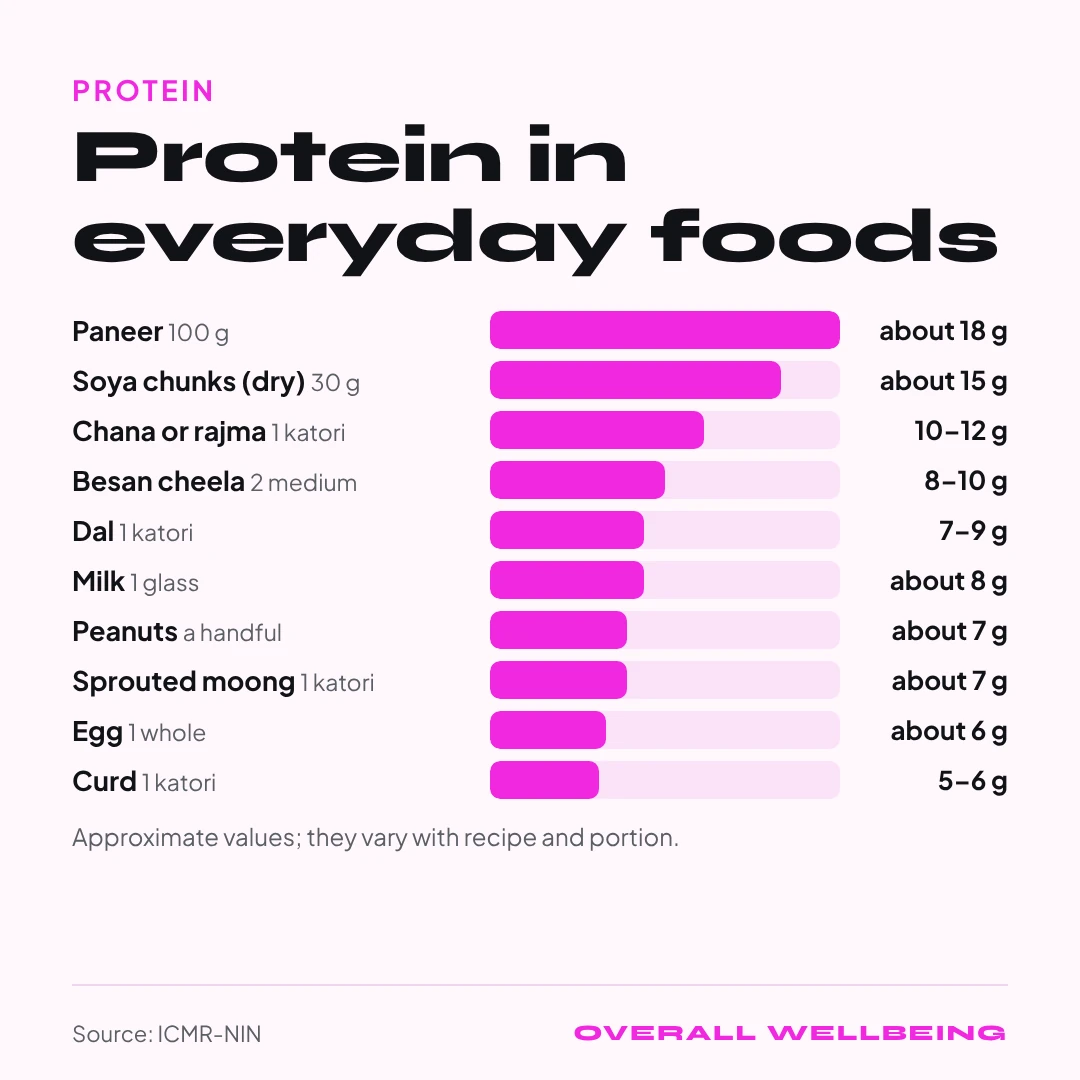
| Food | Typical serving | Protein (approx.) |
|---|---|---|
| Cooked dal (moong, masoor, toor) | 1 katori (about 150 g) | 7–9 g |
| Cooked chana or rajma | 1 katori | 10–12 g |
| Soya chunks (dry) | 30 g | about 15 g |
| Paneer | 100 g | about 18 g |
| Tofu | 100 g | 8–12 g |
| Curd | 1 katori (about 150 g) | about 5–6 g |
| Milk | 1 glass (250 ml) | about 8 g |
| Peanuts | 30 g (a handful) | about 7 g |
| Sprouted moong | 1 katori | about 7 g |
| Besan cheela | 2 medium | 8–10 g |
| Egg (non-veg option) | 1 whole | about 6 g |
Values are approximate and vary with recipe and portion.
How to get enough protein
Beginner
- Include protein at every meal, not just dinner: curd or milk at breakfast, dal at lunch, paneer or chana at dinner.
- Combine cereals and pulses. Dal-chawal, rajma-rice, khichdi and idli-sambar combine to give better-quality protein.
- Snack on protein: roasted chana, peanuts, sprouts or buttermilk instead of biscuits or namkeen.
Intermediate
- Add soya, paneer or tofu a few times a week. They are especially protein-rich.
- Keep thicker dal portions. A watery dal has less protein per katori.
Advanced
- If you do strength training, spread protein evenly across meals. ICMR-NIN notes that intake above about 1.6 g per kg a day doesn't add further muscle gain.
About protein supplements
ICMR-NIN's 2024 Dietary Guidelines for Indians advise against relying on protein powders, and warn that long-term high intake of protein supplements may harm bone and kidney health. Most people can meet their needs from food. If you're considering supplements, talk to a doctor first, especially if you have kidney problems.
Common myths
- "Vegetarians can't get enough protein." A varied Indian vegetarian diet with dal, legumes, dairy, soya and nuts can meet protein needs.
- "More protein is always better." Beyond your needs, extra protein brings no added benefit, and very high intakes from supplements may cause harm.
- "Only gym-goers need protein." Everyone needs protein every day, for muscles, immunity and repair.
Try this today
Add one protein food to your breakfast: curd, milk, eggs, besan cheela, sprouts or peanuts.
When to see a doctor
Talk to a doctor before increasing protein a lot if you have kidney disease, liver disease or diabetes, or before starting any protein supplement.
Common questions
How can a vegetarian get 60 g of protein a day?
For example: 1 glass milk (8 g) + 2 besan cheelas (9 g) + 2 katoris dal (16 g) + 1 katori curd (6 g) + 100 g paneer (18 g) + a handful of peanuts (7 g) = about 64 g.
Is dal enough for protein?
Dal is an excellent source, but combining it with cereals, dairy, soya and nuts gives more complete protein.
Do I need protein powder for the gym?
Most people don't. Food can meet your needs; ICMR-NIN advises against relying on protein supplements.
Sources
- Nutrient Requirements for Indians: brief note — ICMR-NINconsensus
- Dietary Guidelines for Indians — ICMR-NIN 2024consensus
- Healthy diet — WHOstrong
Part of these Essentials
Related guides
In the same area of life
Healthy Indian diet plan for everyday life
Dietary variety
Nutrient-dense food intake
Fruit and vegetable intake
Healthy dietary fat sources
Complex carbohydrate quality
Adequate dietary fiber
Vitamin D and B12: food, sunlight and when to get tested
Build a calm, personal practice
Explore more of the framework, or open your personal Wellbeing space to focus on what matters most right now.