High blood pressure: everyday habits that help bring it down

The short answer
High blood pressure (hypertension) usually has no symptoms, so the only way to know is to get it measured. WHO defines it as 140/90 mmHg or higher on two different days. Daily habits can lower blood pressure and support treatment: much less salt, more vegetables and fruit, at least 150 minutes of activity a week, losing weight if you're overweight, limiting alcohol, stopping tobacco, and good sleep and stress control.
This guide covers everyday habits. It doesn't replace your doctor's advice. Never stop or change blood pressure medicines without talking to your doctor.
Blood pressure in brief
Blood pressure is written as two numbers, for example 120/80 mmHg:
- The top number (systolic): pressure when your heart beats
- The bottom number (diastolic): pressure between beats
WHO defines hypertension as 140/90 mmHg or higher, measured on two different days. Your doctor will tell you what your own readings mean and what target is right for you.
Why it matters: untreated high blood pressure increases the risk of heart attack, stroke, kidney disease and eye damage, often without warning signs.
Habits that help
Beginner
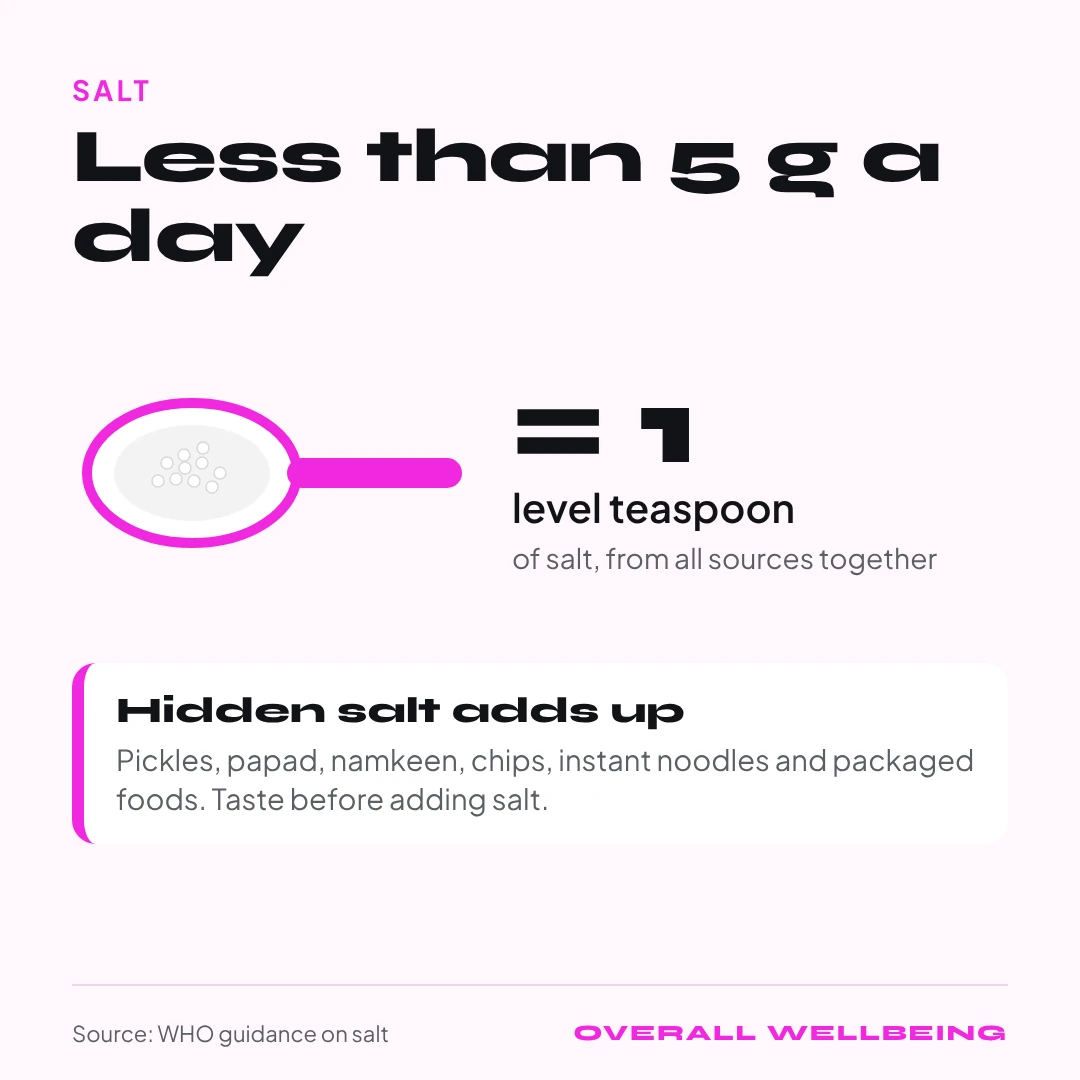
- Cut salt. WHO recommends less than 5 g of salt (about one teaspoon) a day, all sources included. Reduce salt in cooking gradually, and limit pickles, papad, namkeen, chips, instant noodles and packaged foods.
- Eat more vegetables and fruit. WHO recommends at least 400 g a day. They're naturally rich in potassium, which helps balance salt.
- Move every day. WHO recommends at least 150 minutes of moderate activity a week, such as brisk walking, plus strength exercises on 2 or more days.
Intermediate
- Lose weight if you're overweight. Even a few kilos can lower blood pressure.
- Limit alcohol. WHO advises no more than 1 drink a day for women and 2 for men; less is better.
- Stop tobacco in all forms: cigarettes, bidis, gutka and khaini.
Advanced
- Check your blood pressure at home, if your doctor suggests it. Sit quietly for 5 minutes first, use a validated upper-arm monitor, and keep a record to show your doctor.
- Manage stress and sleep. Ongoing stress and poor sleep can push blood pressure up.
- Read labels for sodium. Packaged foods can be surprisingly salty.
Common myths
- "I feel fine, so my blood pressure must be normal." High blood pressure usually has no symptoms.
- "Rock salt or pink salt is healthier." All salts contain sodium; the amount matters, not the type.
- "Once it's normal, I can stop my tablets." Normal readings often mean the treatment is working. Talk to your doctor before changing anything.
Try this today
Taste your food before adding salt, and leave the salt shaker off the table.
When to see a doctor
Seek urgent care if you have very high blood pressure (usually 180/120 or higher) with a severe headache, chest pain, difficulty breathing, confusion, vision changes, weakness or numbness, or difficulty speaking.
See a doctor if you've never had your blood pressure checked, if home readings are often high, or if you have diabetes, kidney disease or a family history of heart disease. WHO advises regular checks for all adults.
Common questions
How can I lower blood pressure naturally?
Eat less salt, more vegetables and fruit, be active, lose weight if needed, limit alcohol and stop tobacco. These habits work alongside, not instead of, prescribed treatment.
How much salt is safe per day?
WHO recommends less than 5 g (about one teaspoon) a day, including salt in packaged foods.
What is normal blood pressure?
WHO defines high blood pressure as 140/90 mmHg or above. Ask your doctor what your own target should be.
Does stress cause high blood pressure?
Stress can raise blood pressure temporarily, and ongoing stress may contribute over time. Managing stress is helpful.
Sources
- Hypertension — WHOstrong
- Healthy diet — WHOstrong
- Physical activity — WHOstrong
Part of these Essentials
Related guides
In the same area of life
Cardiovascular health
Cardiovascular endurance
Resting heart rate
Heart rate variability (HRV)
Circulatory health
Respiratory health
Respiratory rate
Lung capacity and function
Build a calm, personal practice
Explore more of the framework, or open your personal Wellbeing space to focus on what matters most right now.