
How to lose weight safely: a practical Indian guide
The short answer
Safe weight loss is slow and steady: about 0.5–1 kg a week. It comes from eating a little less than your body uses (smaller cereal portions, more vegetables and dal, less sugar, fried food and packaged snacks) and moving more every day. For Indians, health risks start at a lower weight than for Europeans, so even losing 5–10% of your body weight can make a real difference. Avoid crash diets, "fat-burner" products and protein powders sold for weight loss.
Our examples use Indian foods, but the same principles apply to any diet: more vegetables, whole grains and protein, and less sugar, salt and fried food.
Are you at a healthy weight?
For people of South Asian origin, guidelines use lower cut-offs than for Europeans, because health risks such as diabetes and heart disease rise at a lower weight.
| Measure | Healthy | Higher risk |
|---|---|---|
| BMI (weight in kg ÷ height in m²) | 18.5–22.9 | 23–27.4 overweight; 27.5+ obese |
| Waist | Less than half your height | More than half your height |
Source: NHS (South Asian BMI thresholds and waist-to-height guidance).
Example: if you're 165 cm tall, aim for a waist under 82.5 cm.
How weight loss actually works
Your weight changes when the energy you eat is more or less than the energy you use. To lose weight, you need to eat a little less and move a little more, consistently. There's no special food, drink or powder that "melts fat". The approach that works is the one you can keep up for months, not weeks.
Practical steps
Beginner
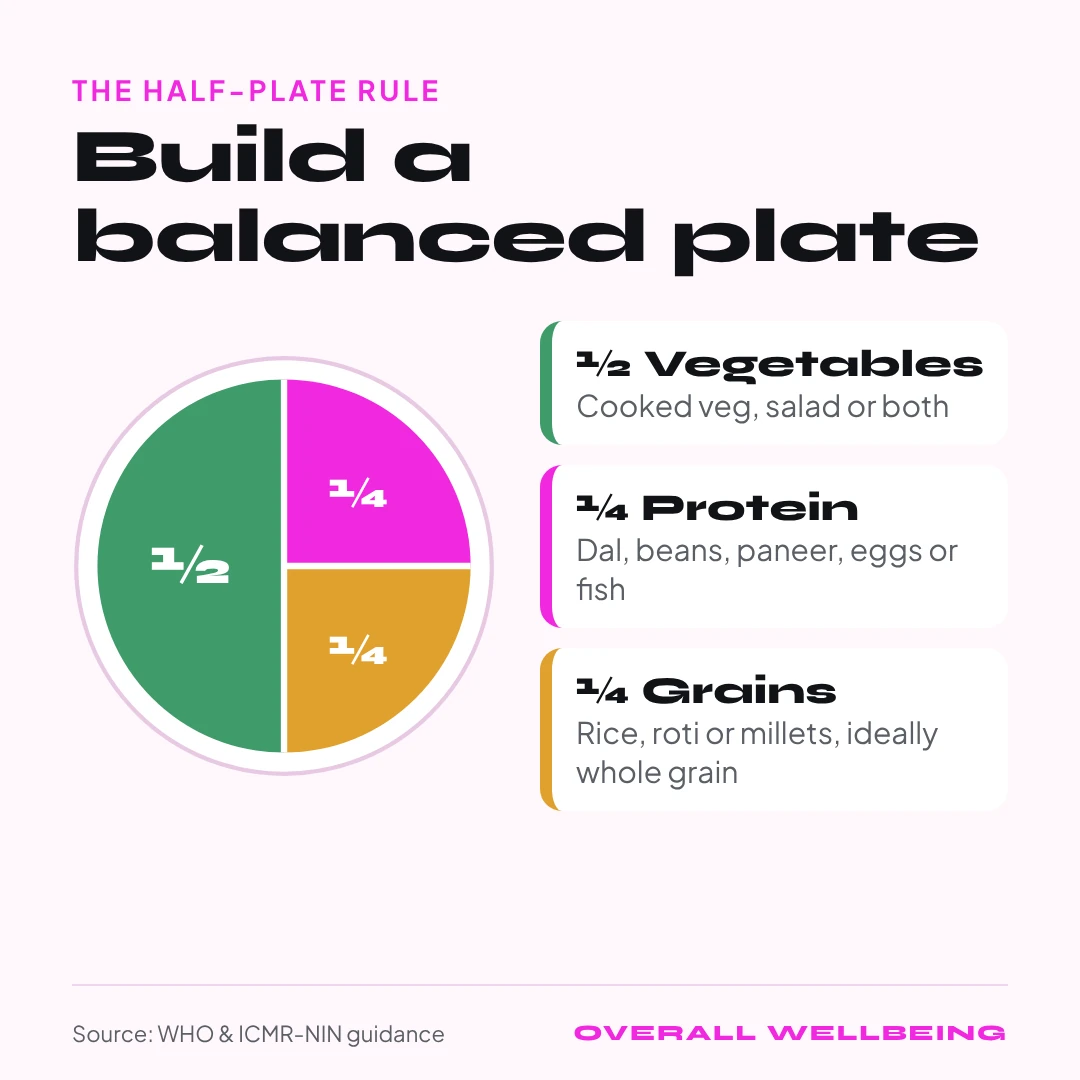
- Use the half-plate rule. Fill half your plate with vegetables, a quarter with dal, beans, paneer, eggs or fish, and a quarter with rice, roti or millets.
- Cut sugary drinks and sweets first. Sugar in chai, cold drinks, packaged juices, mithai and biscuits adds up quickly. Reducing these is often the easiest early win.
- Walk every day. Start with 20–30 minutes of brisk walking and build up to at least 150 minutes a week of moderate activity, as WHO recommends.
- Don't skip meals, especially breakfast. Skipping often leads to overeating later. Eat regular meals at regular times.
Intermediate
- Reduce cereal portions, not whole food groups. ICMR-NIN advises that cereals should provide no more than about 45% of your daily energy. One less roti, or a smaller katori of rice, makes a steady difference.
- Eat more protein and fibre. Dal, chana, rajma, curd, paneer, eggs, vegetables and whole grains keep you full for longer. See How much protein you need.
- Cook with less oil and fry less. Steam, roast, grill or pressure-cook more often. Measure oil with a spoon instead of pouring.
- Limit packaged and fried snacks. Namkeen, chips, bhujia, samosas and bakery items are high in calories, fat and salt.
Advanced
- Add strength training twice a week. Strength work helps you keep muscle while losing fat. See Strength training for beginners.
- Sleep 7 or more hours. Poor sleep increases hunger and cravings and makes weight loss harder.
- Track for a few weeks. Note what you eat, your steps and your waist size each week. Tracking helps you spot patterns, such as evening snacking.
What to avoid
- Crash diets and very low-calorie plans without medical supervision
- "Fat-burner" pills, slimming teas and detox drinks: there's no good evidence they work, and some can be harmful
- Protein powders as a weight-loss shortcut: ICMR-NIN advises against protein supplements for most people
- Weight-loss medicines or injections without a doctor's prescription and supervision
Common myths
- "Eating after 7 pm makes you fat." Total food over the day matters more than the clock, though very late heavy meals can affect sleep and digestion.
- "Rice makes you fat, roti doesn't." Both are cereals. Portion size matters more than the choice.
- "Sweating more means burning more fat." Sweat is water, not fat.
- "Jaggery and honey are healthy sugar." ICMR-NIN treats jaggery and honey as sugar, just like white sugar.
Try this today
At lunch and dinner, fill half your plate with vegetables or salad first, then add dal and a smaller portion of rice or roti.
When to see a doctor
See a doctor if:
- your BMI is 27.5 or more, or your waist is more than half your height, especially with high blood pressure, high sugar or a family history of diabetes or heart disease;
- you're losing weight without trying;
- you have a health condition, are pregnant, or take regular medicines and want to change your diet a lot;
- you're considering weight-loss medicines or surgery.
Common questions
How fast can I safely lose weight?
About 0.5–1 kg a week is a safe, sustainable pace for most adults.
What is the best diet for weight loss in India?
A balanced home-style diet with half your plate as vegetables, enough dal or other protein, smaller cereal portions, and little sugar, fried food or packaged snacks.
Can I lose weight just by walking?
Walking helps, especially combined with eating a little less. For the best results, combine both.
Is intermittent fasting good for weight loss?
It can help some people eat less overall, but it isn't better than other ways of cutting calories. Check with a doctor first if you have diabetes or take medicines.
Sources
- Obesity — NHSstrong
- Healthy diet — WHOstrong
- Physical activity — WHOstrong
- Dietary Guidelines for Indians — ICMR-NIN 2024consensus
Part of these Essentials
Related guides
In the same area of life
Cardiovascular health
Cardiovascular endurance
Resting heart rate
Heart rate variability (HRV)
High blood pressure: everyday habits that help bring it down
Circulatory health
Respiratory health
Respiratory rate
Build a calm, personal practice
Explore more of the framework, or open your personal Wellbeing space to focus on what matters most right now.