Walking for health: how many steps you really need

The short answer
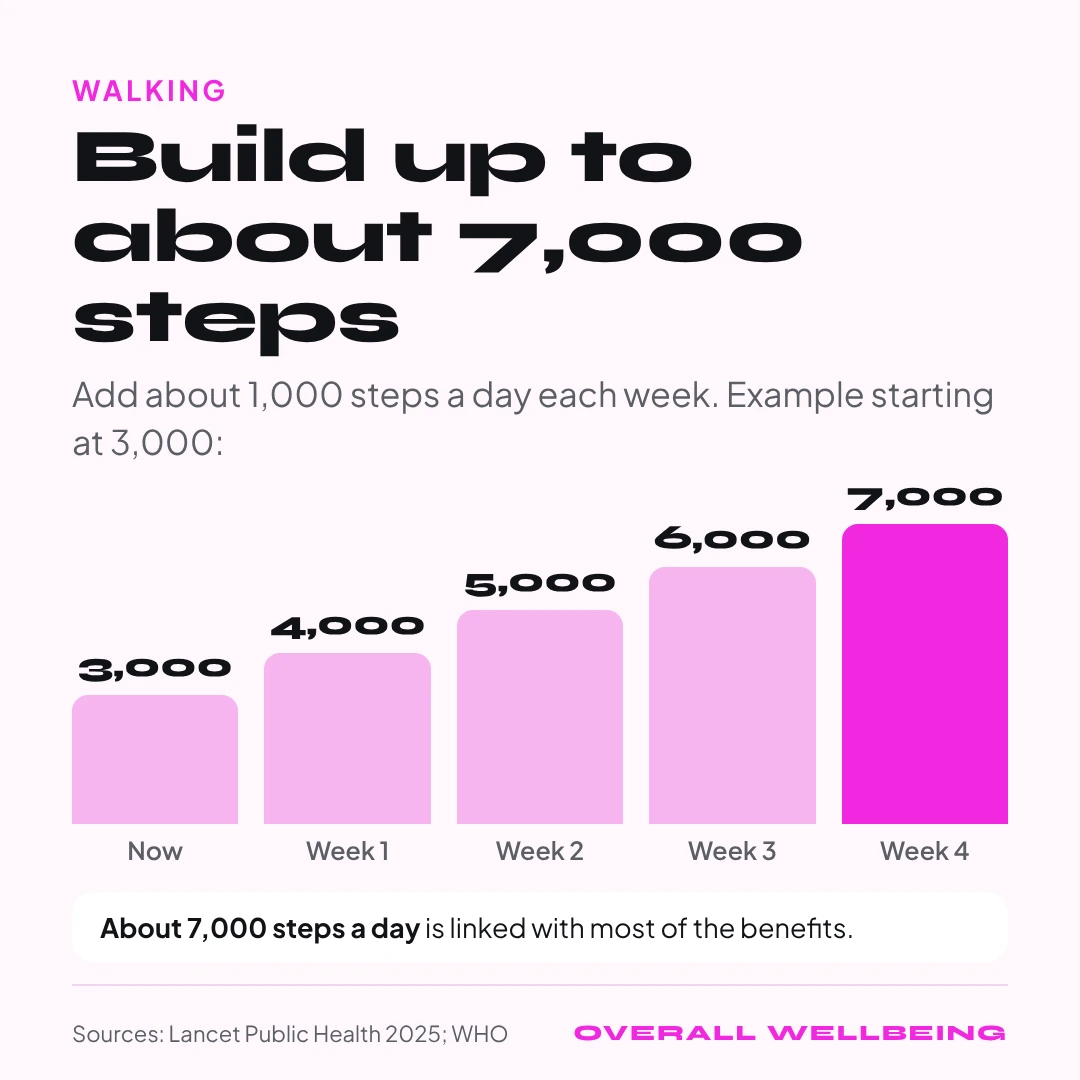
You don't need 10,000 steps a day to benefit. A large 2025 review of studies found that about 7,000 steps a day is linked with most of the health benefits, including lower risk of early death, heart disease, dementia and depression, and even a few thousand more steps than you take now helps. Official guidance is to get at least 150 minutes of moderate activity a week, and brisk walking counts.
How much should I walk?
| Goal | What to aim for |
|---|---|
| WHO / NHS activity guideline | At least 150 minutes of moderate activity a week, e.g. 30 minutes of brisk walking on 5 days |
| Steps (research) | About 7,000 steps a day is linked with most of the benefits; more is fine but not essential |
| If you're starting from very little | Add about 1,000 steps a day each week until you reach your goal |
Sources: WHO; NHS; Lancet Public Health meta-analysis (2025).
What counts as "brisk"? You can talk, but not sing. Your breathing is faster and you feel warmer.
Why walking is so good for you
Walking is free, needs no equipment, and suits almost every age and fitness level. Regular walking helps your heart, blood pressure, blood sugar, weight, mood and sleep, and it's easy on the joints.
How to walk more
Start here (beginner)
- Walk after meals. A 10–15 minute walk after lunch or dinner is an easy daily habit, and it helps with blood sugar and digestion.
- Track your steps on your phone or a watch to see your starting point.
- Walk while you talk. Take phone calls standing up or walking.
Build on it (intermediate)
- Add small walks to your day: use the stairs, park further away, walk to the local market, or get off the bus or metro one stop early.
- Pick up the pace. Mix in a few minutes of faster walking every 5 minutes.
- Walk with someone: family, a friend or a walking group. You're more likely to keep it up.
Go further (advanced)
- Build to 30–45 minutes of brisk walking most days.
- Add hills or stairs for a stronger workout.
- Combine walking with strength exercises twice a week (see Strength training for beginners).
Walking in Indian conditions
- Heat: walk early morning or after sunset in summer, and carry water.
- Pollution: on high-pollution days, walk indoors (malls, corridors, a treadmill) or keep it shorter.
- Monsoon: walk indoors or under cover; wear shoes with good grip.
- Shoes: comfortable, supportive walking shoes help prevent foot and knee pain.
Common myths
- "You need 10,000 steps or it's useless." Benefits start well below 10,000; around 7,000 a day brings most of them.
- "Walking isn't real exercise." Brisk walking is moderate-intensity exercise and counts towards the guidelines.
- "Only long walks count." Short walks of 10 minutes add up across the day.
Try this today
Check your phone's step count for today, then add a 10-minute brisk walk after one meal.
When to see a doctor
Check with a doctor before starting if you have heart disease, chest pain, uncontrolled blood pressure or diabetes, or joint problems. Stop and seek help if you get chest pain, severe breathlessness, dizziness or fainting while walking.
Common questions
Is walking enough exercise?
Brisk walking can meet the 150-minute guideline. Adding strength exercises twice a week gives extra benefits.
What's the best time to walk?
Whenever you can do it regularly. A walk after meals is especially useful.
Can walking help with weight loss?
Yes, especially combined with eating a little less.
Sources
- Physical activity — WHOstrong
- Physical activity guidelines for adults aged 19 to 64 — NHSstrong
- Daily steps and health outcomes in adults — Lancet Public Health (2025)moderate
Part of these Essentials
Related guides
In the same area of life
Cardiovascular health
Cardiovascular endurance
Resting heart rate
Heart rate variability (HRV)
High blood pressure: everyday habits that help bring it down
Circulatory health
Respiratory health
Respiratory rate
Build a calm, personal practice
Explore more of the framework, or open your personal Wellbeing space to focus on what matters most right now.