Back pain from sitting: posture and simple stretches
The short answer
Long hours of sitting at a desk, on a phone or in traffic are a common cause of lower back and neck pain. What helps most is moving often: getting up every 30–60 minutes, walking daily, and doing simple stretches and strengthening exercises. A well-set-up chair and screen helps too. Most back pain improves within a few weeks. Staying active is better than resting in bed. See a doctor if pain doesn't improve or comes with warning signs.
Why sitting causes back pain
Sitting for long periods, especially slouched or leaning towards a screen, puts steady strain on the back and neck. Weak core and back muscles, little exercise, and stress add to it.
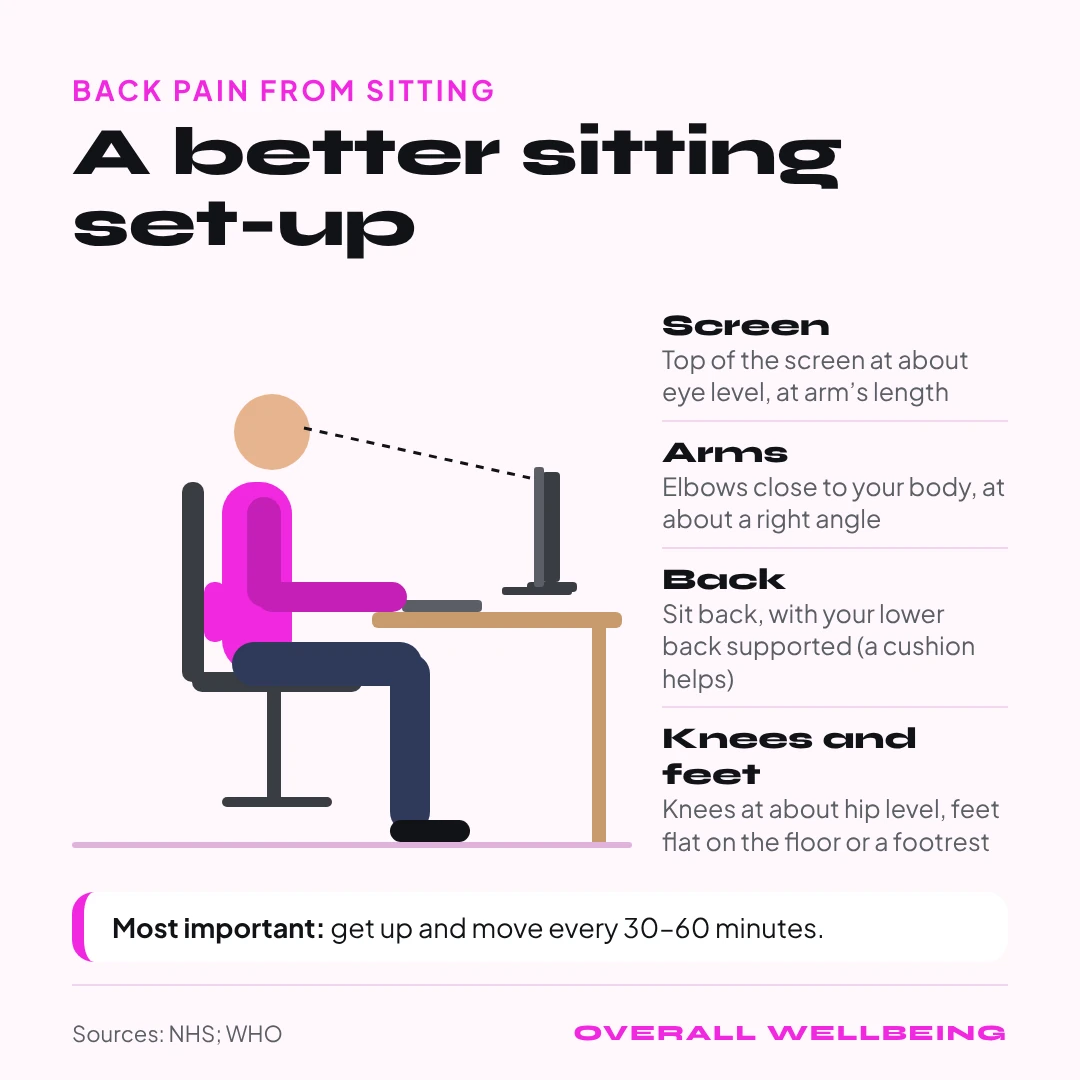
A better sitting set-up
These are practical tips:
- Chair: sit back so your lower back is supported. A small cushion or rolled towel behind your lower back can help.
- Feet: flat on the floor or on a footrest, with knees at about hip level.
- Screen: at arm's length, with the top of the screen about at eye level. Raise a laptop on books or a stand and use a separate keyboard.
- Arms: elbows close to your body, at about a right angle; keyboard and mouse within easy reach.
- Phone: hold it up closer to eye level instead of bending your neck down.
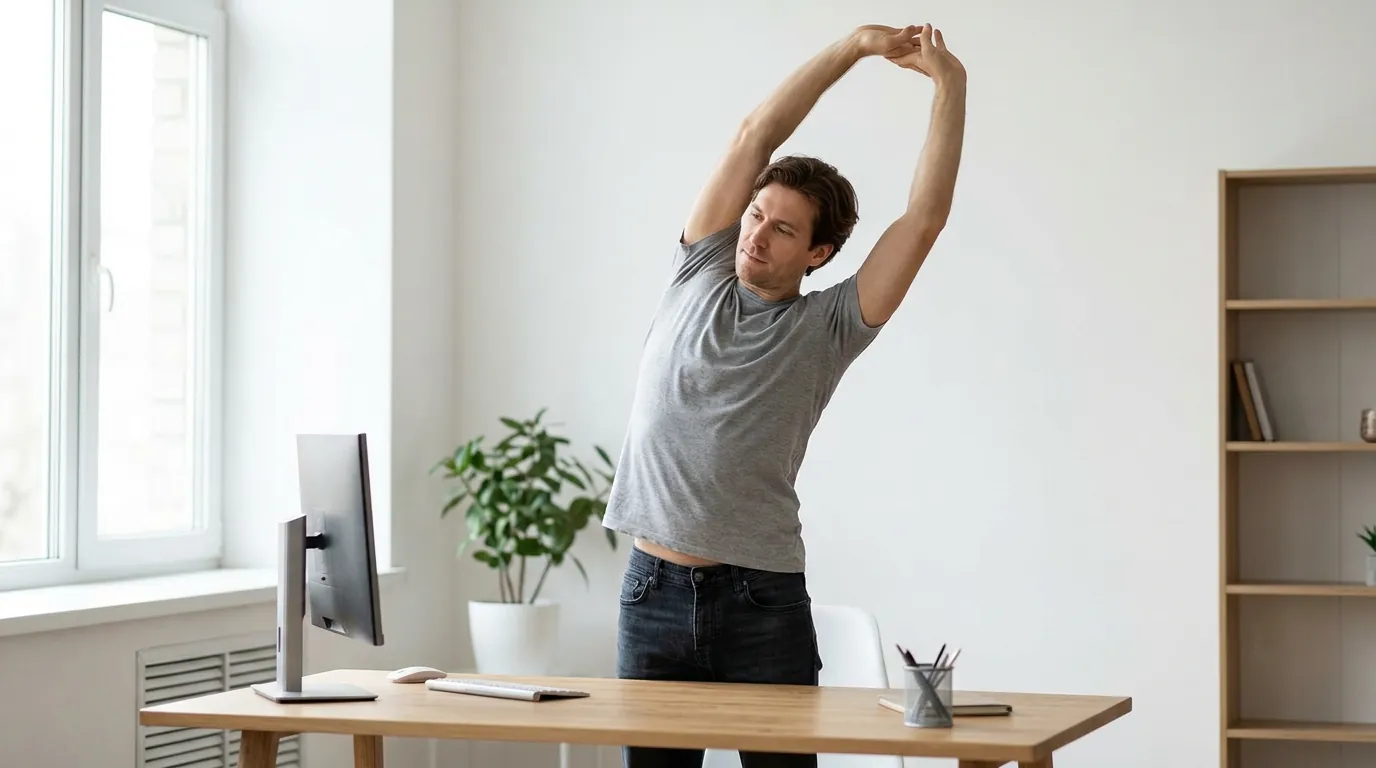
Simple stretches (2–5 minutes, a few times a day)
Move gently, and stop if pain gets worse.
- Standing back bend: stand, place hands on your lower back, and gently lean back. Hold 3–5 seconds; repeat 5 times.
- Seated twist: sit tall, turn your upper body to one side holding the chair back, and hold for 10 seconds; repeat on the other side.
- Neck stretch: gently tilt your ear towards your shoulder and hold for 10–15 seconds each side.
- Shoulder rolls: roll your shoulders backwards 10 times.
- Knee-to-chest (at home): lie on your back and bring one knee towards your chest, hold for 15 seconds, then switch.
Habits that help
Beginner
- Get up every 30–60 minutes. Walk to fill water, take calls standing, or climb a flight of stairs.
- Walk daily, building up to at least 150 minutes a week.
- Stay active when your back hurts. Gentle movement helps recovery more than bed rest.
Intermediate
- Strengthen your core and back twice a week: planks, bridges and bird-dog exercises. See Strength training for beginners.
- Try yoga or stretching classes. Gentle yoga and pilates can help many people with back pain.
- Use heat or cold: a hot water bottle eases stiffness; a cold pack can help a new strain. Wrap either in a cloth.
Advanced
- Lift with your knees, not your back, and keep heavy objects close to your body.
- Manage stress and sleep. Both can make pain feel worse.
Common myths
- "Rest in bed until the pain goes." Staying active usually helps you recover faster.
- "Back pain always means a serious problem." Most back pain isn't serious and improves within weeks.
- "There's one perfect posture." Changing position often matters more than holding one "perfect" posture.
Try this today
Set a reminder to stand up, stretch and walk for 2 minutes every 45 minutes of sitting.
When to see a doctor
See a doctor if pain doesn't improve after a few weeks, stops you doing daily activities, is worse at night, or comes with weight loss without trying, a lump or swelling, or pain between the shoulder blades.
Get emergency help (call 112 in India, or your local emergency number) if you have numbness or weakness in both legs, numbness around the genitals or bottom, loss of bladder or bowel control, chest pain, or pain after a serious fall or accident.
Common questions
How long should I sit at a stretch?
Try to break up sitting at least every 30–60 minutes, even for a minute or two.
Is a standing desk better?
Alternating between sitting and standing, and moving often, matters more than standing all day.
Which exercise is best for lower back pain?
Walking, gentle stretches, and core strengthening such as bridges and planks help many people. Stop any exercise that makes pain worse.
Sources
- Back pain — NHSstrong
- Physical activity — WHOstrong
Part of these Essentials
Related guides
In the same area of life
Cardiovascular health
Cardiovascular endurance
Resting heart rate
Heart rate variability (HRV)
High blood pressure: everyday habits that help bring it down
Circulatory health
Respiratory health
Respiratory rate
Build a calm, personal practice
Explore more of the framework, or open your personal Wellbeing space to focus on what matters most right now.