
Thyroid diet: what to eat, what to limit and daily habits
The short answer
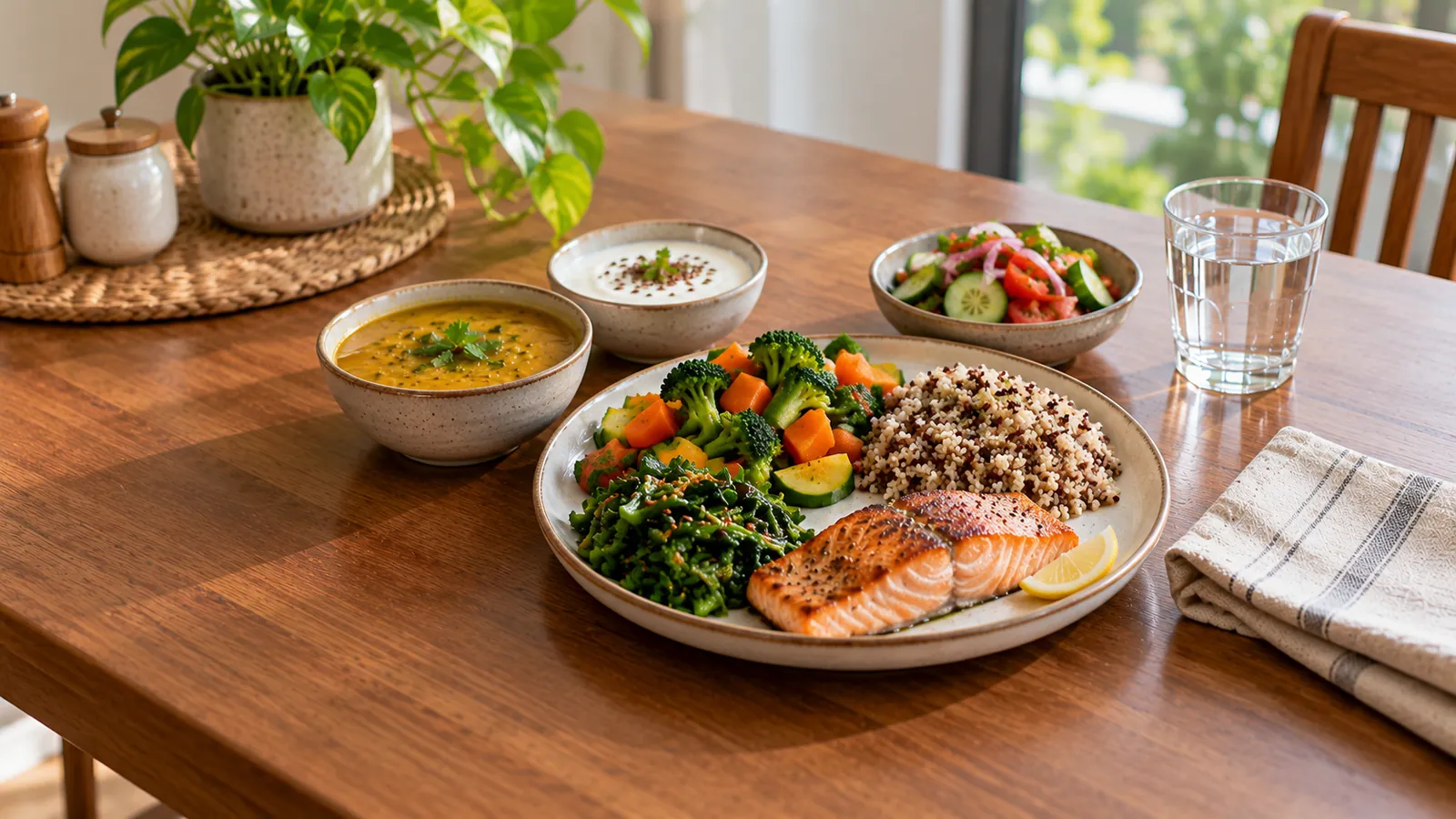
For most people with thyroid problems, no special diet fixes the thyroid. Treatment from your doctor is what corrects it. What helps alongside treatment: using iodised salt (in normal amounts), a balanced diet with plenty of vegetables, fruit, whole grains and protein, regular activity, good sleep, and taking your thyroid medicine exactly as prescribed. If you take levothyroxine, take it on an empty stomach and keep a gap before food, tea or coffee, as your doctor or pharmacist advises.
Our examples use Indian foods, but the same principles apply to any diet: more vegetables, whole grains and protein, and less sugar, salt and fried food.
This guide covers everyday habits. It doesn't replace your doctor's advice. Never stop or change thyroid medicine without talking to your doctor.
The thyroid in brief
The thyroid is a small gland in your neck that makes hormones controlling your metabolism. Two common problems:
- Underactive thyroid (hypothyroidism): too little hormone. It often causes tiredness, feeling cold, weight gain, constipation, dry skin or hair, low mood and heavy or irregular periods.
- Overactive thyroid (hyperthyroidism): too much hormone. It often causes weight loss, a fast heartbeat, anxiety, shakiness and feeling hot.
Symptoms develop slowly and can be mistaken for stress or ageing. Only a blood test can tell.
Food: what helps
Beginner
- Use iodised salt, but not too much. The thyroid needs iodine to make hormone, and iodised salt is the main source for most Indians. Keep total salt under about 5 g (one teaspoon) a day.
- Eat a balanced plate: vegetables, dal or other protein, whole grains, fruit, curd or milk. See Healthy Indian diet plan.
- Eat fibre-rich foods. Constipation is common with an underactive thyroid; vegetables, fruit, whole grains, dal and enough water help.
Intermediate
- Don't take iodine or "thyroid support" supplements without advice. Too much iodine can also cause thyroid problems.
- Cabbage, cauliflower and soya in normal amounts are generally fine, especially cooked. If you eat very large amounts of raw cruciferous vegetables or soya every day, mention it to your doctor.
- Keep sugar and fried foods low, especially if weight gain is a concern.
Your thyroid medicine and food (levothyroxine)
If you take levothyroxine for an underactive thyroid, the NHS advises:
- take it once a day at the same time, usually in the morning;
- take it on an empty stomach with water, 30–60 minutes before breakfast, tea, coffee or other medicines;
- calcium and iron supplements, and antacids, can affect how it works, so ask your doctor or pharmacist how far apart to take them.
Have the regular blood tests your doctor recommends; your dose may need adjusting over time.
Daily habits that help
- Stay active: at least 150 minutes a week, plus strength exercises twice a week. This helps energy, mood and weight.
- Sleep 7 or more hours.
- Manage weight gradually, with the steps in How to lose weight safely. With an underactive thyroid, weight usually becomes easier to manage once treatment is right.
Common myths
- "A special thyroid diet can cure it." Diet supports health, but most thyroid conditions need medical treatment.
- "People with thyroid problems must never eat cabbage or soya." Normal amounts, especially cooked, are generally fine. Ask your doctor about your situation.
- "More iodine is always better." Too much iodine can also harm the thyroid.
Try this today
Check that the salt in your kitchen is iodised (it should say so on the pack).
When to see a doctor
See a doctor if you have symptoms such as ongoing tiredness, weight changes, feeling cold or hot, a fast heartbeat, a swelling in the neck, or changes in periods; if you have a family history of thyroid disease; or if you're pregnant or planning pregnancy and have a thyroid condition.
Common questions
What should I eat for hypothyroidism?
A balanced diet with vegetables, fruit, whole grains, protein and iodised salt in normal amounts, alongside your prescribed treatment.
Can I drink tea with thyroid medicine?
Wait 30–60 minutes after taking levothyroxine before tea or coffee, as the NHS advises.
Can thyroid problems cause weight gain?
An underactive thyroid can cause some weight gain. It usually becomes easier to manage once treatment is right.
Is ghee or coconut oil good for the thyroid?
There's no good evidence that any particular oil treats thyroid problems. Use all fats in moderation.
Sources
- Underactive thyroid (hypothyroidism) — NHSstrong
- Levothyroxine — NHS Medicinesstrong
- Iodine deficiency — American Thyroid Associationstrong
- Healthy diet — WHOstrong
Part of these Essentials
Related guides
In the same area of life
Cardiovascular health
Cardiovascular endurance
Resting heart rate
Heart rate variability (HRV)
High blood pressure: everyday habits that help bring it down
Circulatory health
Respiratory health
Respiratory rate
Build a calm, personal practice
Explore more of the framework, or open your personal Wellbeing space to focus on what matters most right now.