High cholesterol: foods and habits that help
The short answer
High cholesterol usually has no symptoms, but it raises the risk of heart attack and stroke. A blood test is the only way to know. Habits that help: eating less saturated fat (ghee, butter, vanaspati, coconut and palm oil, fatty meat, cream) and avoiding trans fats; eating more fibre from vegetables, fruit, whole grains, oats and dal; using healthier oils in moderation; at least 150 minutes of activity a week; losing weight if needed; stopping tobacco; and limiting alcohol.
Our examples use Indian foods, but the same principles apply to any diet: more vegetables, whole grains and protein, and less sugar, salt and fried food.
This guide covers everyday habits. It doesn't replace your doctor's advice. Never stop or change cholesterol medicines without talking to your doctor.
Cholesterol in brief
Cholesterol is a fatty substance in your blood. Your body needs some, but too much, especially "bad" LDL cholesterol, can build up in the arteries and narrow them over time. "Good" HDL cholesterol helps remove it. Your doctor will explain your own test results and what they mean for you.
Food: what helps
Beginner
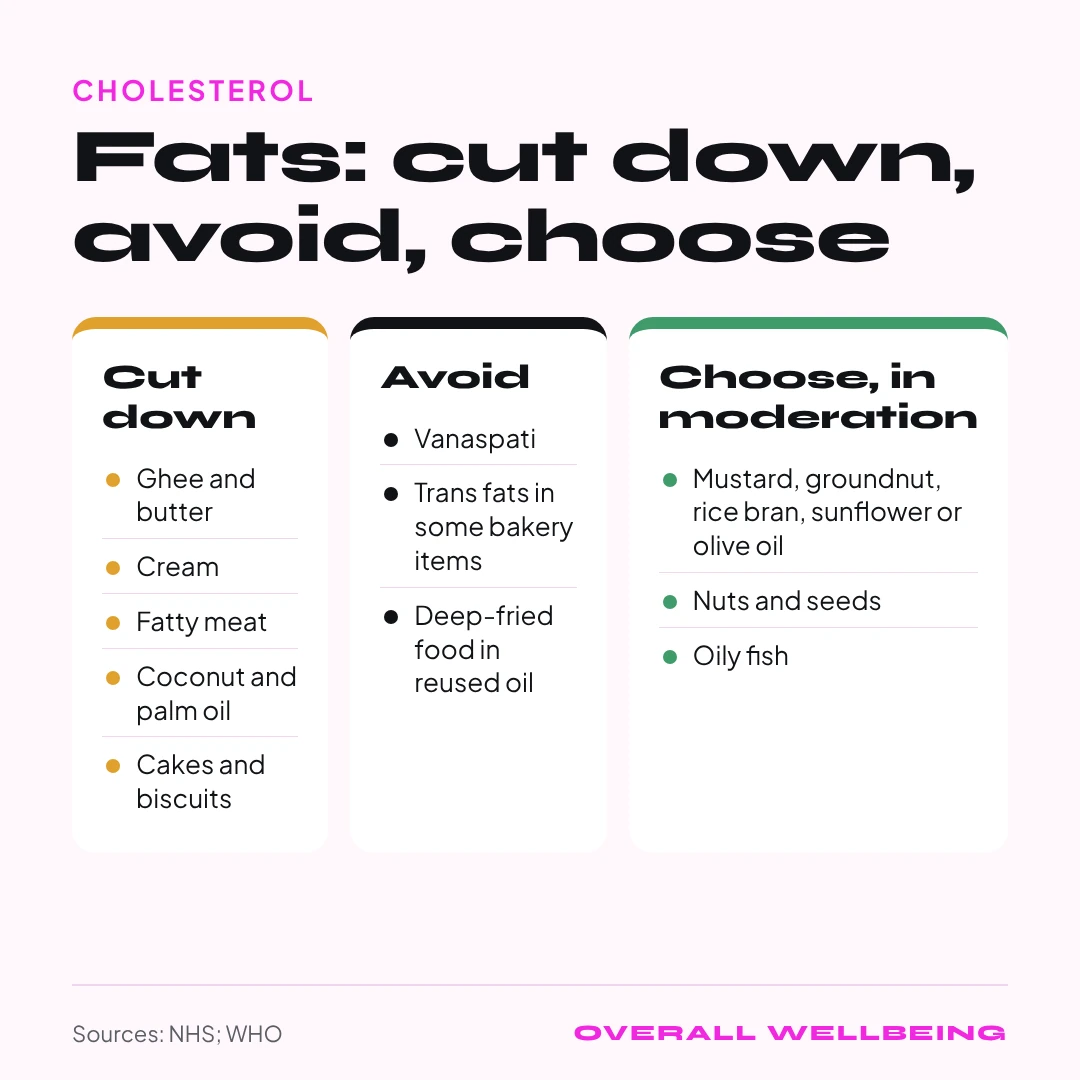
- Cut down on saturated fat. The NHS advises cutting down on butter, ghee, cream, fatty meat, cakes and biscuits, and foods with coconut or palm oil.
- Avoid trans fats. Vanaspati, some bakery items, and deep-fried street food made in reused oil can contain trans fats. WHO advises avoiding industrially produced trans fats.
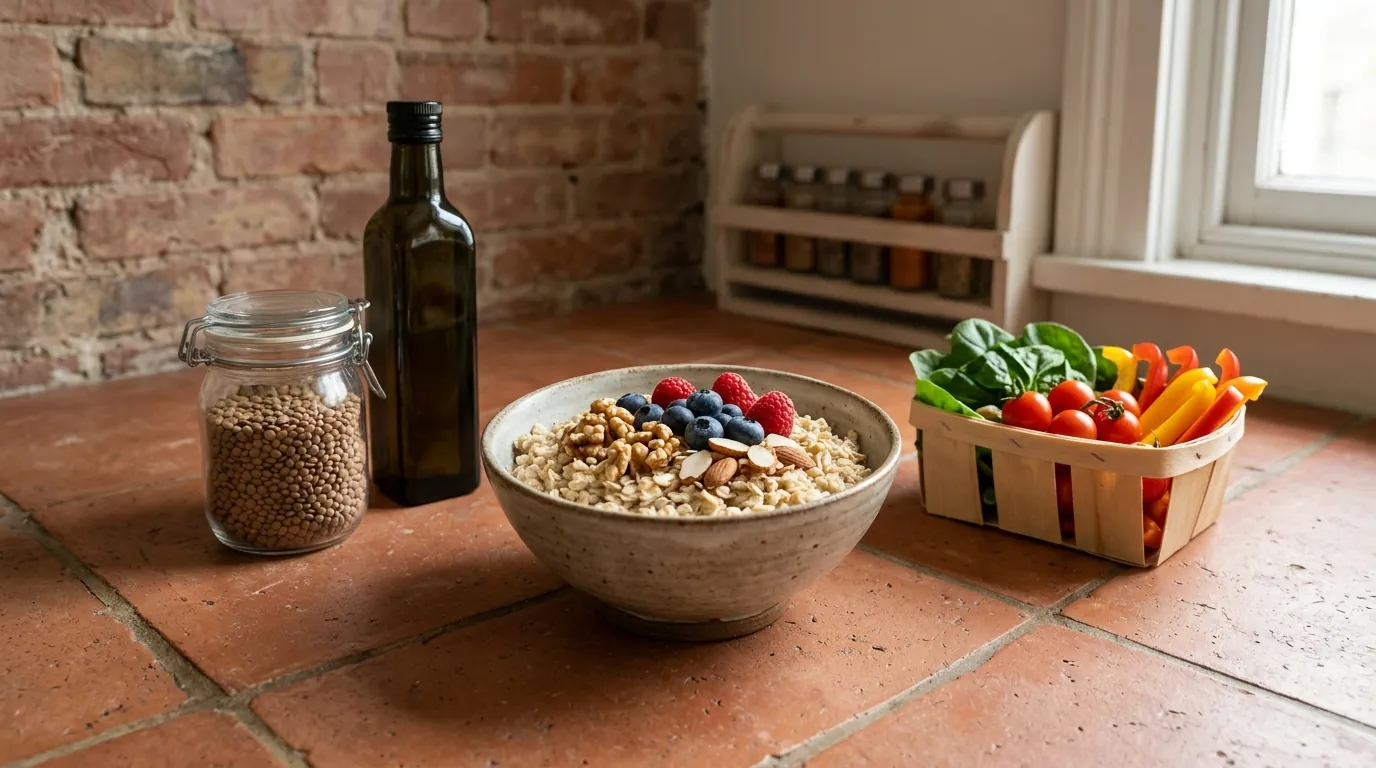
- Eat more fibre: vegetables, fruit, oats, whole grains, dal, rajma, chana and other legumes.
Intermediate
- Choose healthier oils, in moderation. Use oils such as mustard, groundnut, rice bran, sunflower or olive oil instead of ghee or vanaspati, and measure them with a spoon.
- Eat nuts and seeds: a small handful of almonds, walnuts, peanuts, flaxseed or til most days.
- Choose fish over red meat, if you eat non-vegetarian food. Oily fish such as mackerel (bangda) and sardines are good choices.
Advanced
- Read labels for saturated and trans fat.
- Fry less. Steam, roast, grill, bake or pressure-cook more often.
Daily habits that help
- Be active for at least 150 minutes a week (or 75 minutes of vigorous activity).
- Lose weight if you're overweight.
- Stop smoking and all tobacco.
- Limit alcohol, with several alcohol-free days each week.
Common myths
- "Thin people don't get high cholesterol." Anyone can have high cholesterol, including people at a healthy weight; genes play a role.
- "Eggs must be completely avoided." For most people, eggs in moderation can be part of a healthy diet. Ask your doctor if you have very high cholesterol.
- "Ghee is heart-healthy in any amount." Ghee is high in saturated fat; use it sparingly.
Try this today
Swap one fried snack for a handful of unsalted nuts or roasted chana.
When to see a doctor
Ask your doctor about a cholesterol test if you're over 40, have diabetes, high blood pressure, a family history of early heart disease (before 55 in men or 65 in women), or a family history of high cholesterol.
Get emergency help (call 112 in India, or your local emergency number) for chest pain or pressure, pain spreading to the arm, jaw or back, sudden breathlessness, or sudden weakness or numbness on one side.
Common questions
Which foods reduce cholesterol?
Fibre-rich foods (oats, dal, legumes, vegetables, fruit), nuts and seeds, and replacing saturated fats with healthier oils can help.
Is ghee bad for cholesterol?
Ghee is high in saturated fat. Small amounts are fine for most people, but cut down if your cholesterol is high.
Can exercise lower cholesterol?
Regular activity can help improve cholesterol levels, especially alongside diet changes and weight loss.
Sources
- High cholesterol: how to lower your cholesterol — NHSstrong
- Healthy diet — WHOstrong
- Dietary Guidelines for Indians — ICMR-NIN 2024consensus
Part of these Essentials
Related guides
In the same area of life
Cardiovascular health
Cardiovascular endurance
Resting heart rate
Heart rate variability (HRV)
High blood pressure: everyday habits that help bring it down
Circulatory health
Respiratory health
Respiratory rate
Build a calm, personal practice
Explore more of the framework, or open your personal Wellbeing space to focus on what matters most right now.