Exercise for beginners at home
The short answer
You can get fit at home with no equipment. Adults should aim for at least 150 minutes of moderate activity a week (or 75 minutes of vigorous activity) plus strength exercises on 2 days, and should break up long periods of sitting. Start small, even 10 minutes a day, and build up gradually. A simple home routine of brisk marching or dancing, chair squats, wall push-ups, stretches and yoga is a great start.
How much exercise do adults need?
| Type | How much | Examples |
|---|---|---|
| Moderate activity | 150 minutes a week | Brisk walking, dancing, cycling, skipping slowly |
| or vigorous activity | 75 minutes a week | Running, fast skipping, sports, fast cycling |
| Strength exercises | At least 2 days a week | Squats, push-ups, resistance bands, yoga |
| Sitting | Break it up | Stand and move every 30–60 minutes |
Source: WHO and NHS physical activity guidelines.
Moderate or vigorous? Moderate: you can talk but not sing. Vigorous: you can only say a few words before pausing for breath.
A 15-minute beginner home routine
Warm up (3 minutes): march on the spot, swing your arms, and roll your shoulders.
Main set (10 minutes): do each for 40 seconds and rest 20 seconds; repeat the circuit twice.
- Brisk marching or dancing to music
- Sit-to-stand from a sturdy chair (no arms, no wheels)
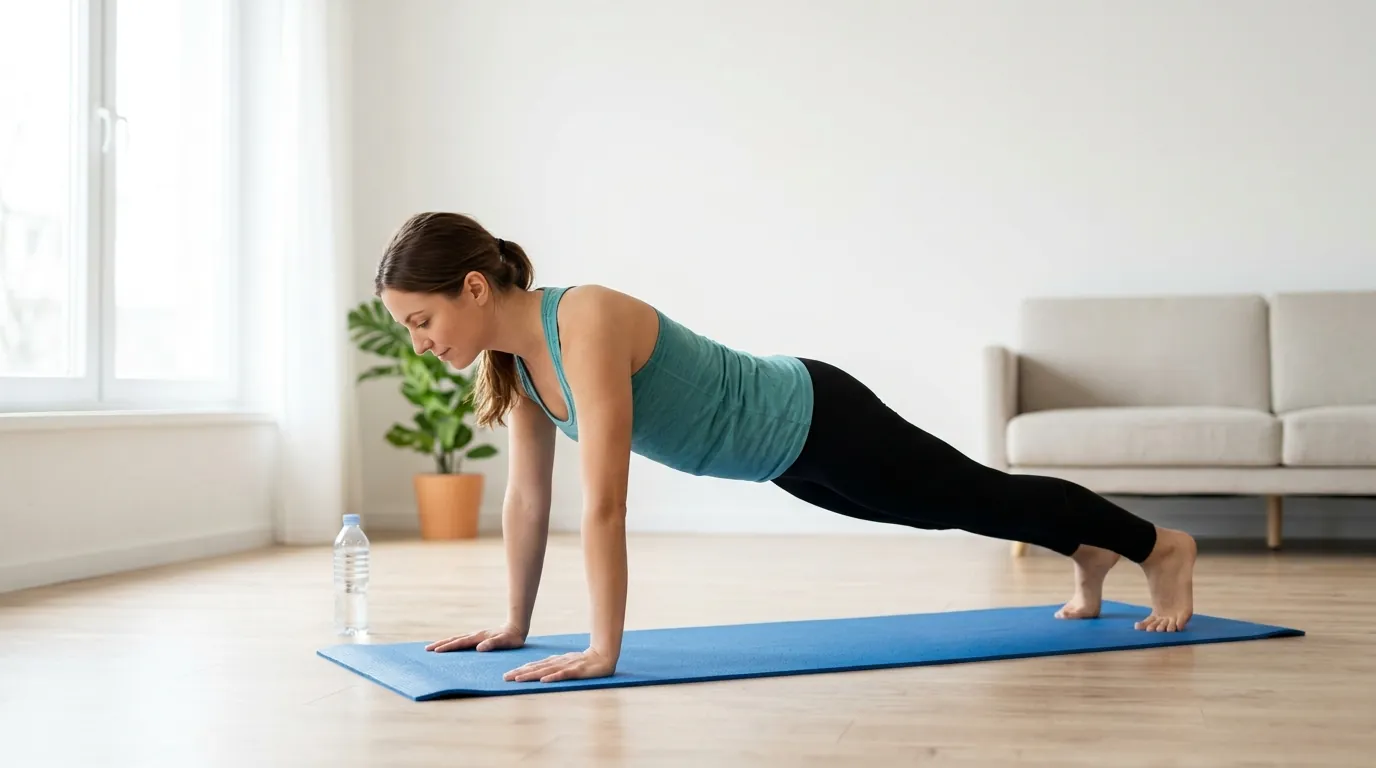
- Wall push-ups: hands on the wall at chest height, then bend and straighten your arms
- Step-ups on the bottom stair, holding the rail
- Standing knee lifts, alternating legs
Cool down (2 minutes): gentle stretches for calves, thighs, chest and shoulders, plus slow breathing.
How to build the habit
Start here (beginner)
- Start with 10 minutes a day and add 5 minutes each week.
- Same time, same place: for example, right after waking or before dinner.
- Use what you have: stairs, a chair, water bottles as light weights, a yoga mat or a towel.
Build on it (intermediate)
- Mix it up: walking, home workouts, yoga, dancing, cycling or a sport you enjoy.
- Add strength days: follow Strength training for beginners twice a week.
- Follow a video or app class if you like guidance.
Go further (advanced)
- Increase the challenge gradually: more rounds, slightly faster pace, or harder versions such as knee push-ups instead of wall push-ups.
- Try short bursts of vigorous activity, such as skipping or fast stair climbing, if your doctor agrees.
Staying safe
- Wear comfortable clothes and supportive shoes, and keep water nearby.
- Move within a comfortable range, and stop if you feel pain.
- Exercise in a cool, well-ventilated space in hot weather.
Common myths
- "No gym means no real exercise." Bodyweight exercises at home can build fitness and strength.
- "Yoga isn't exercise." Yoga builds strength, flexibility and balance; for heart fitness, add brisk walking or other aerobic activity too.
- "I'm too old or unfit to start." Gentle, gradual activity benefits people of all ages.
Try this today
Do the 15-minute beginner routine below once.
When to see a doctor
Talk to a doctor first if you have heart disease, chest pain, uncontrolled blood pressure or diabetes, joint or back problems, or are pregnant. Stop and get help if you feel chest pain, severe breathlessness, dizziness or faintness while exercising.
Common questions
What's the best home exercise for beginners?
Brisk marching or dancing, chair squats, wall push-ups and step-ups are simple, safe starting points.
Can I lose weight with home workouts?
Yes, especially combined with eating a little less and walking more.
Is 15 minutes of exercise enough?
It's a great start. Build up to 150 minutes a week over time.
Sources
- Physical activity — WHOstrong
- Physical activity guidelines for adults aged 19 to 64 — NHSstrong
- Strength exercises — NHSstrong
Part of these Essentials
Related guides
In the same area of life
Cardiovascular health
Cardiovascular endurance
Resting heart rate
Heart rate variability (HRV)
High blood pressure: everyday habits that help bring it down
Circulatory health
Respiratory health
Respiratory rate
Build a calm, personal practice
Explore more of the framework, or open your personal Wellbeing space to focus on what matters most right now.