
Belly fat: what really helps
The short answer
Fat around the stomach (abdominal or visceral fat) is linked with a higher risk of type 2 diabetes, high blood pressure and heart disease, and Indians tend to store more of it. You can't "spot-reduce" belly fat with crunches. It comes down with overall weight loss: less sugar, refined cereals and fried food, more vegetables and protein, regular activity, enough sleep and less stress. Measure your waist to track progress.
Why belly fat matters
Fat stored deep inside the abdomen, around organs like the liver, is more harmful than fat under the skin elsewhere. South Asians often carry more abdominal fat even at a normal body weight, sometimes called being "thin outside, fat inside".
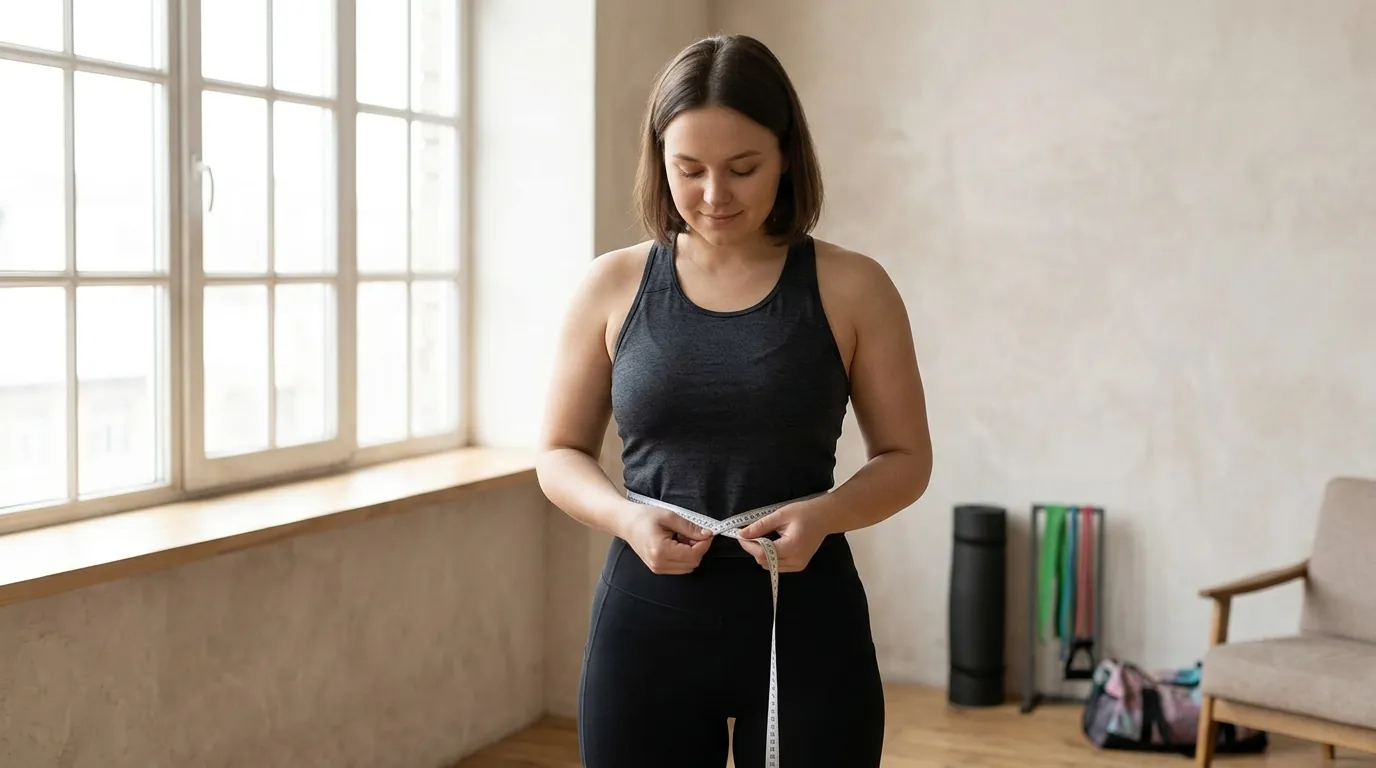
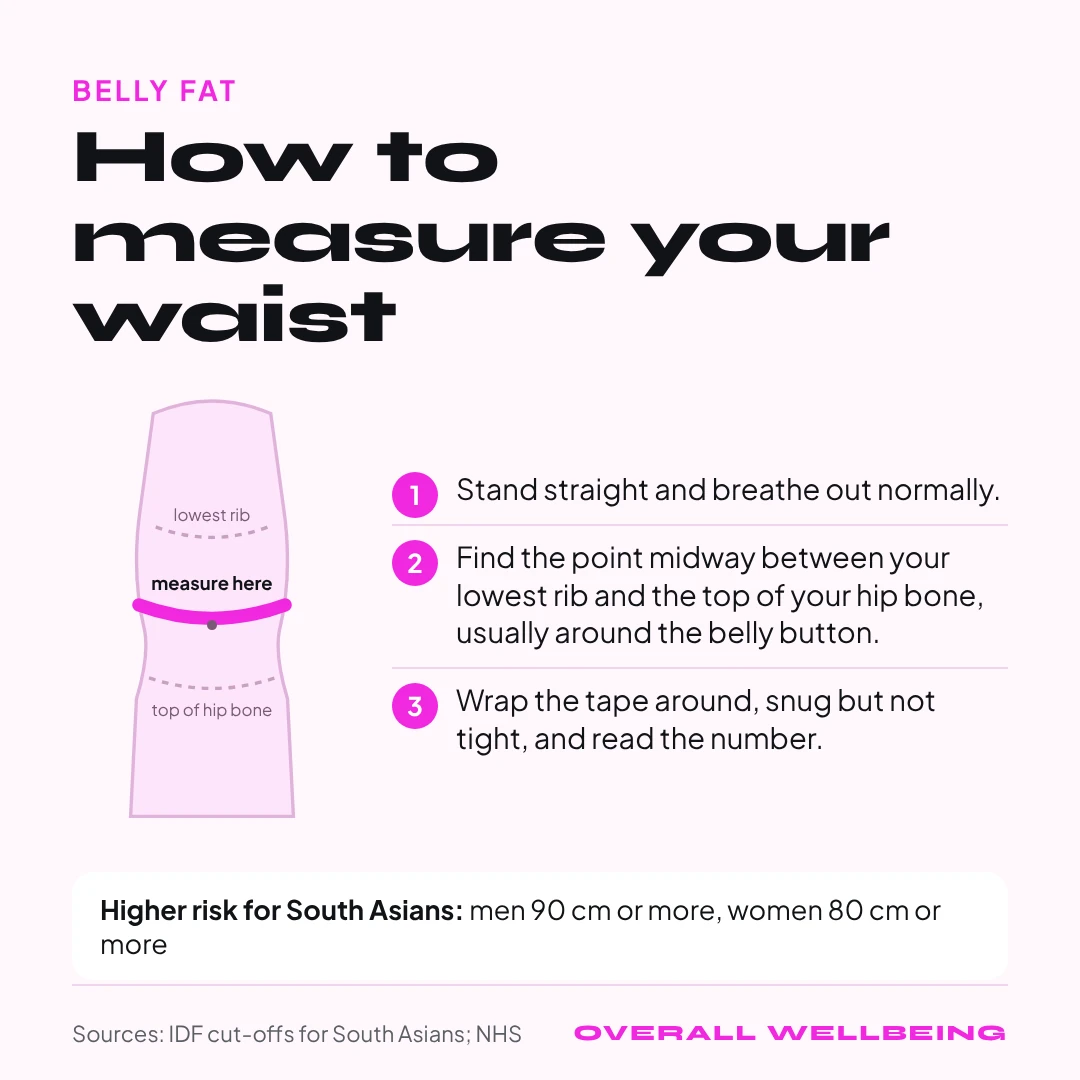
How to measure your waist
- Stand straight and breathe out normally.
- Find the point midway between your lowest rib and the top of your hip bone, usually around the belly button.
- Wrap a measuring tape around it, snug but not tight, and read the number.
| Measure | Higher risk for Indians |
|---|---|
| Waist (men) | 90 cm or more |
| Waist (women) | 80 cm or more |
| Waist-to-height | Waist more than half your height |
Sources: International Diabetes Federation cut-offs for South Asians; NHS waist-to-height guidance.
What really helps
Beginner
- Cut sugar and sugary drinks. Sweet chai, soft drinks, packaged juices and mithai are among the biggest contributors to belly fat.
- Walk briskly every day. Aim for at least 150 minutes a week; every bit of movement counts.
- Swap refined for whole. Choose whole wheat, millets (bajra, jowar, ragi), brown or hand-pounded rice and whole dals over maida, white bread and biscuits.
Intermediate
- Fill up on vegetables and protein. Half your plate vegetables, plus dal, curd, paneer, eggs or fish at every meal.
- Cut fried and packaged snacks. Namkeen, chips, pakoras and bakery items add a lot of calories quickly.
- Limit alcohol. Alcohol adds empty calories and is strongly linked with abdominal fat.
Advanced
- Add strength training twice a week. Building muscle helps your body use energy better.
- Sleep 7 or more hours and manage stress. Poor sleep and constant stress are linked with more belly fat and cravings.
Common myths
- "Crunches burn belly fat." Exercises strengthen muscles, but fat loss happens across the whole body, not just where you exercise.
- "Jeera water or lemon-honey water melts belly fat." No drink melts fat. They're fine as drinks, but they won't replace diet and activity.
- "Thin people don't have belly fat." Many Indians at a normal weight still carry harmful abdominal fat. That's why measuring your waist matters.
Try this today
Measure your waist (see below) and write down the number and date.
When to see a doctor
See a doctor if your waist is above the higher-risk cut-offs, especially if you also have high blood pressure, high blood sugar, a family history of diabetes or heart disease, or feel unusually tired or thirsty. A doctor may suggest simple blood tests.
Common questions
How long does it take to lose belly fat?
With steady changes, many people see their waist reduce over 2–3 months. Track it monthly.
Which exercise is best for belly fat?
Regular brisk walking or other cardio, combined with strength training twice a week. No single exercise targets belly fat alone.
Can I lose belly fat without losing weight?
Some people lose waist size while their weight changes little, because they gain muscle. That's still progress.
Sources
- Waist circumference guidelines for different ethnic groups — Harvard T.H. Chan School of Public Health (IDF cut-offs)consensus
- Obesity — NHSstrong
- Physical activity — WHOstrong
- Dietary Guidelines for Indians — ICMR-NIN 2024consensus
Part of these Essentials
Related guides
In the same area of life
Cardiovascular health
Cardiovascular endurance
Resting heart rate
Heart rate variability (HRV)
High blood pressure: everyday habits that help bring it down
Circulatory health
Respiratory health
Respiratory rate
Build a calm, personal practice
Explore more of the framework, or open your personal Wellbeing space to focus on what matters most right now.