
Diabetes: food, exercise and daily habits that help
The short answer
Type 2 diabetes, which makes up more than 95% of cases, is closely linked to weight, diet and activity, so daily habits make a real difference alongside medical treatment. What helps most: meals built around vegetables, dal and whole grains in sensible portions; very little sugar, sweet drinks and refined foods; at least 150 minutes of activity a week; losing weight if you're overweight; good sleep; no tobacco; and regular check-ups.
Our examples use Indian foods, but the same principles apply to any diet: more vegetables, whole grains and protein, and less sugar, salt and fried food.
This guide covers everyday habits. It doesn't replace your doctor's advice. Never stop or change diabetes medicines without talking to your doctor.
Diabetes in brief
Diabetes means your blood sugar stays too high, because your body doesn't make enough insulin or can't use it properly.
| Type | In short |
|---|---|
| Type 1 | The body makes little or no insulin; daily insulin is needed |
| Type 2 | The body can't use insulin properly; often linked to weight and lifestyle; often preventable |
| Gestational | High blood sugar during pregnancy; raises future risk of type 2 |
| Prediabetes | Blood sugar higher than normal, not yet diabetes; a key time to change habits |
Source: World Health Organization.
Common symptoms: intense thirst, frequent urination, blurred vision, tiredness and unexplained weight loss. Type 2 can have no symptoms for years, which is why check-ups matter.
Food: what helps
Beginner
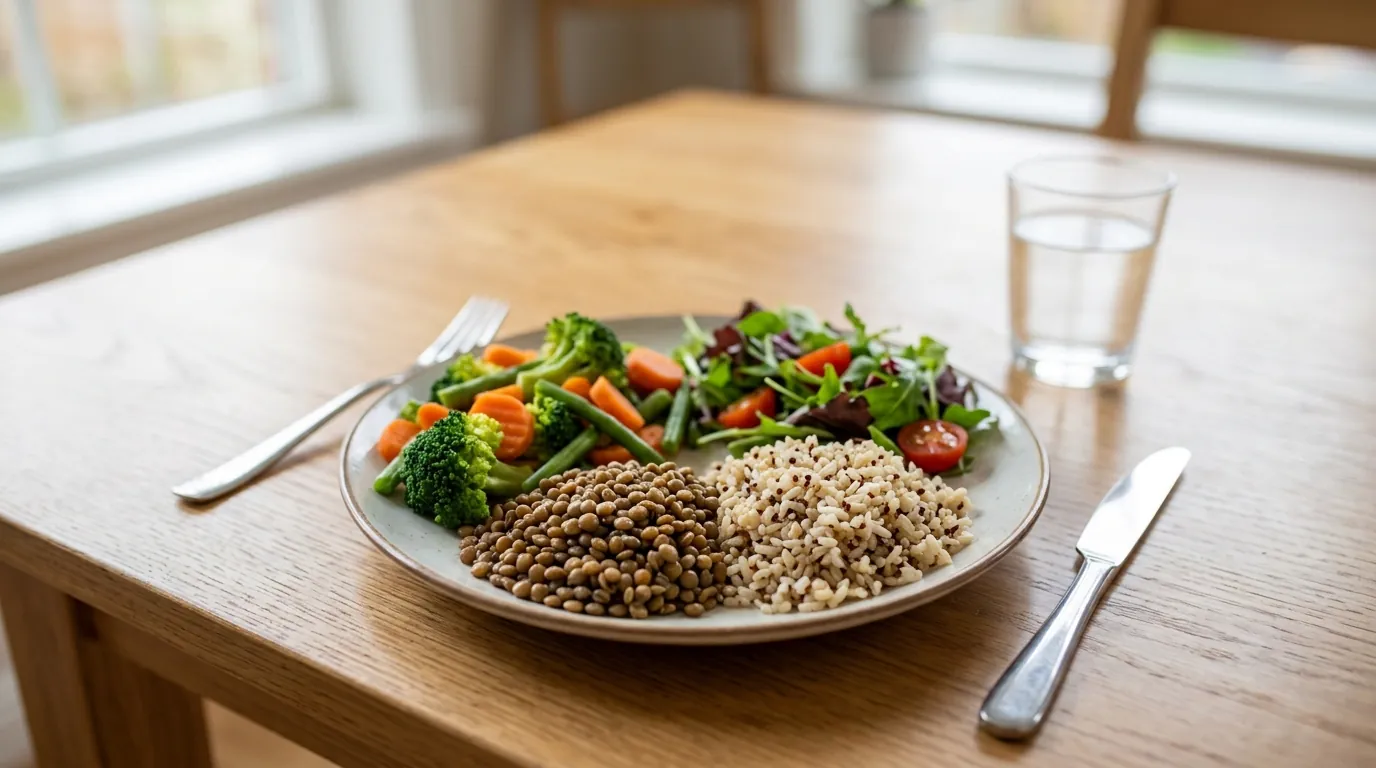
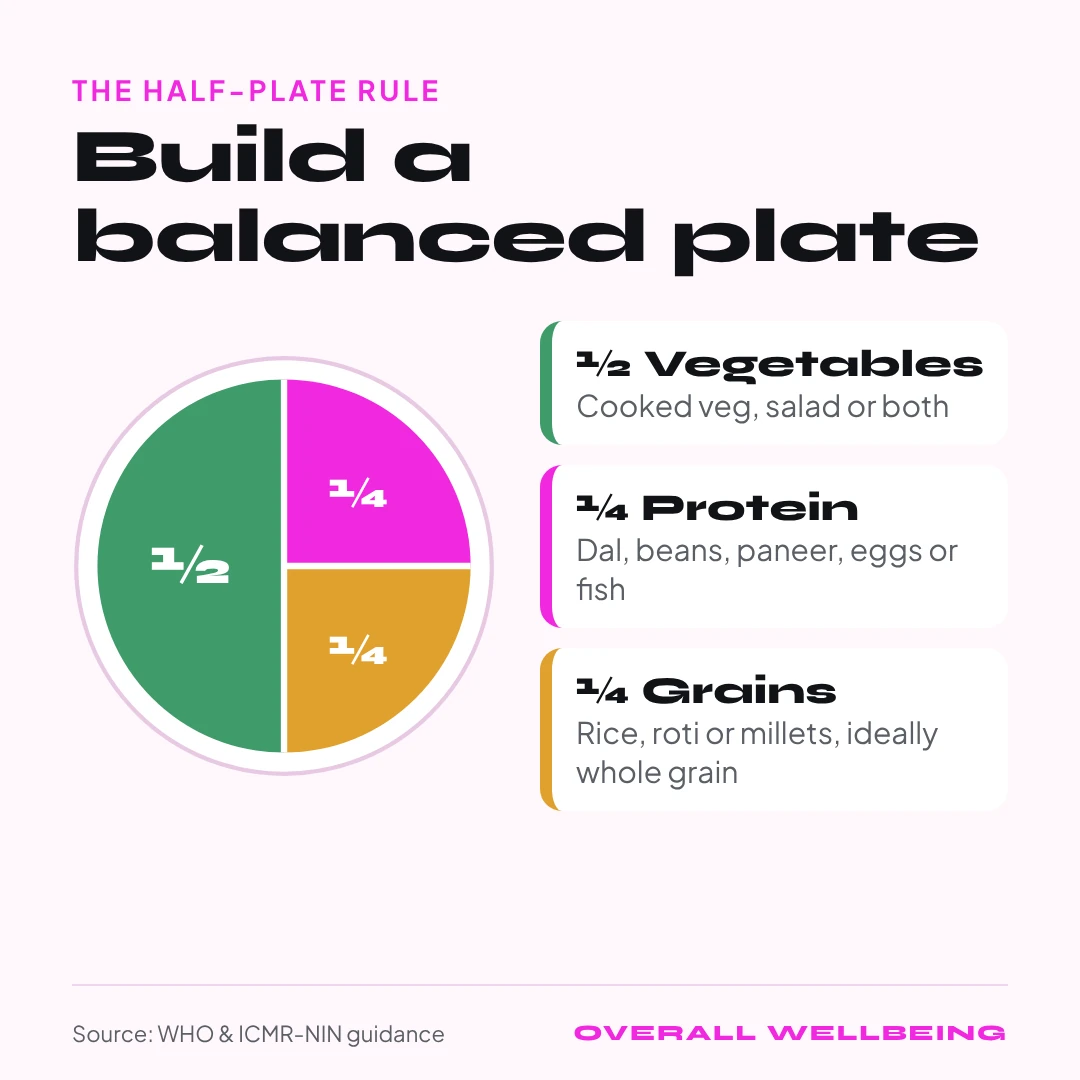
- Use the diabetes-friendly plate: half vegetables, a quarter dal, beans, paneer, eggs or fish, and a quarter whole grains or millets.
- Cut sugar and sweet drinks. Avoid sugar in chai, soft drinks, packaged juices and mithai. Remember that jaggery and honey are sugar too.
- Choose whole over refined. Whole wheat, millets (bajra, jowar, ragi), whole dals and brown or hand-pounded rice rather than maida, white bread and biscuits.
Intermediate
- Watch portions of rice and roti. It's not about banning them; smaller portions with more vegetables and dal help keep blood sugar steadier.
- Eat regular meals. Large gaps followed by big meals can cause bigger sugar swings. If you take diabetes medicines, ask your doctor about meal timing.
- Eat whole fruit, not juice, in sensible portions.
- Limit fried, packaged and salty foods. Diabetes raises heart risk, so less saturated fat and salt matters too.
Advanced
- Make one change a week. The NHS suggests small steady changes rather than overhauling everything at once.
- Ask for a personalised plan. A doctor or registered dietitian can tailor portions to your medicines, weight and routine.
Movement and daily habits
- Move for at least 150 minutes a week, such as brisk walking, cycling or swimming. A short walk after meals is a practical habit.
- Add strength exercises twice a week.
- Lose weight if you're overweight. Even modest weight loss helps blood sugar control.
- Sleep 7 or more hours, and manage stress.
- Stop tobacco in all forms.
- Look after your feet: check them daily for cuts, blisters or colour changes, and wear comfortable footwear.
What to avoid
- Very strict or crash diets without your doctor's approval, especially if you take insulin or diabetes tablets (they can cause low sugar)
- "Diabetes cure" products, herbal mixtures or supplements sold as replacements for treatment
- Stopping medicines because you feel better
Try this today
Take a 10–15 minute walk after your largest meal.
When to see a doctor
Get medical help urgently if you have very high or very low sugar symptoms: confusion, shakiness and sweating, extreme thirst, vomiting, drowsiness or difficulty breathing.
See a doctor if you have symptoms of diabetes, a family history, or a waist or BMI above the healthy range. If you already have diabetes, keep up regular check-ups for blood sugar, blood pressure, eyes, kidneys and feet, as your doctor advises.
Common questions
Can type 2 diabetes be reversed?
Some people, especially those who lose significant weight early on, can bring their blood sugar back to normal levels. Work with your doctor; don't stop medicines on your own.
Can people with diabetes eat rice?
Usually yes, in smaller portions, with plenty of vegetables and dal. Ask your doctor or dietitian about portions that suit you.
Is fruit allowed in diabetes?
Whole fruit in sensible portions is generally fine. Avoid fruit juices.
Which exercise is best for diabetes?
Regular brisk walking plus strength exercises twice a week is a good, simple combination.
Sources
- Diabetes — WHOstrong
- Type 2 diabetes: food and keeping active — NHSstrong
- Dietary Guidelines for Indians — ICMR-NIN 2024consensus
Part of these Essentials
Related guides
In the same area of life
Cardiovascular health
Cardiovascular endurance
Resting heart rate
Heart rate variability (HRV)
High blood pressure: everyday habits that help bring it down
Circulatory health
Respiratory health
Respiratory rate
Build a calm, personal practice
Explore more of the framework, or open your personal Wellbeing space to focus on what matters most right now.