
Fatty liver diet: what to eat, what to avoid
The short answer
Fatty liver, now also called MASLD (metabolic dysfunction-associated steatotic liver disease), means fat has built up in the liver. It's common, often linked to excess weight (especially belly fat), type 2 diabetes, high blood pressure and high cholesterol, and usually has no symptoms. The most effective steps are losing weight if you're overweight, eating a balanced diet with less sugar, refined carbohydrates and fried food, being active for at least 150 minutes a week, and keeping alcohol low or avoiding it.
Our examples use Indian foods, but the same principles apply to any diet: more vegetables, whole grains and protein, and less sugar, salt and fried food.
This guide covers everyday habits. It doesn't replace your doctor's advice. Never start "liver detox" products or change medicines without talking to your doctor.
Fatty liver in brief
Most people with fatty liver have the early stage, simple fat build-up, which often causes no problems. In some people it can progress to inflammation and scarring over time, which is why lifestyle changes matter early.
Higher risk if you: are overweight, especially around the waist; have type 2 diabetes, PCOS, high blood pressure or high cholesterol; are inactive; or are over 50.
Symptoms: usually none. It's often found on an ultrasound or blood test done for another reason. Some people feel tired or have discomfort under the right ribs.
What to eat
Beginner
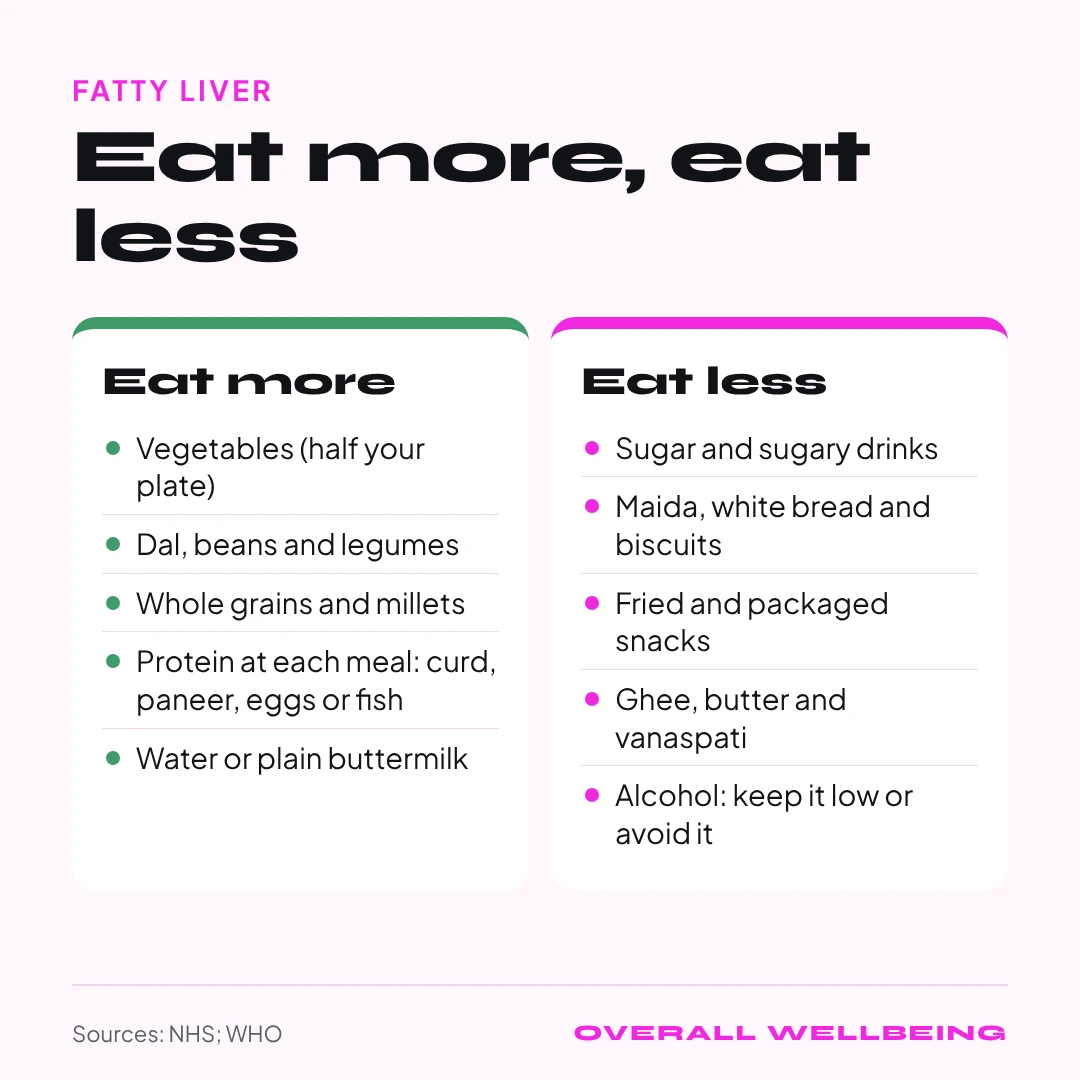
- Cut sugar and sugary drinks: soft drinks, packaged juices, sweet chai and mithai.
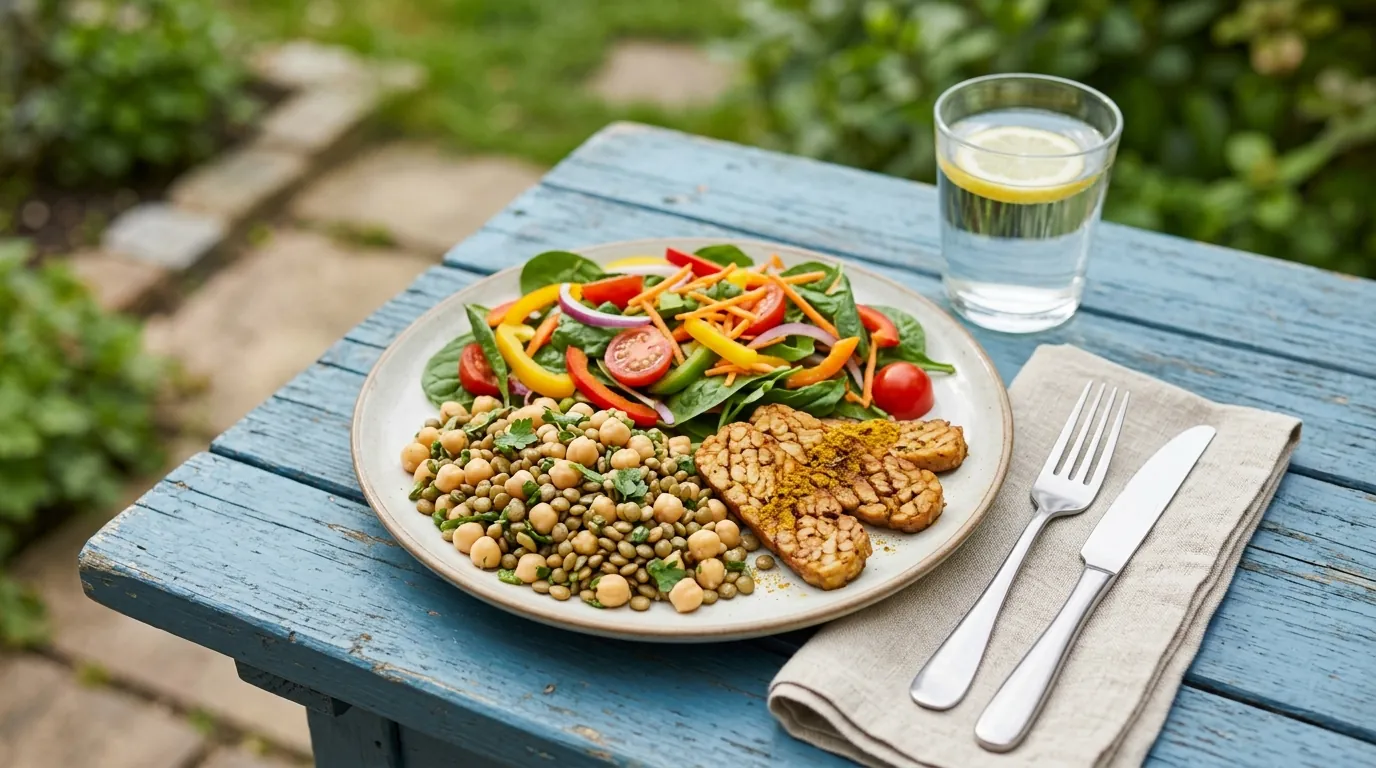
- Eat more vegetables, dal and whole grains, following the half-plate rule.
- Cut fried and packaged foods: namkeen, chips, bakery items, and deep-fried snacks.
Intermediate
- Reduce refined carbohydrates. Choose whole wheat, millets and whole dals over maida, white bread and biscuits.
- Choose healthier oils and use less of them. Limit ghee, butter, vanaspati and coconut or palm oil.
- Include protein at each meal: dal, chana, curd, paneer, eggs or fish.
What to avoid or limit
- Alcohol: keep it low, or avoid it completely. Ask your doctor what's right for you, as many people with fatty liver are advised to stop.
- "Liver detox" teas, powders and herbal products: there's no good evidence they help, and some can harm the liver.
- Crash diets: losing weight very quickly can sometimes worsen liver problems; aim for steady loss.
Daily habits that help
- Lose weight gradually if you're overweight. It's the most effective step; aim for about 0.5–1 kg a week.
- Be active for at least 150 minutes a week, and add strength exercises twice a week.
- Don't smoke.
- Keep diabetes, blood pressure and cholesterol under control with your doctor.
Common myths
- "Only people who drink alcohol get fatty liver." Fatty liver is very common in people who drink little or no alcohol.
- "Thin people can't have fatty liver." It can occur at a normal weight, especially with belly fat.
- "Detox drinks clean the liver." Your liver doesn't need detox products; healthy habits help it most.
Try this today
Replace sugary drinks or packaged juice with water or plain buttermilk.
When to see a doctor
See a doctor if you've been told you have fatty liver, or if you have risk factors such as diabetes or a large waist and want to be checked.
Seek medical help promptly if you notice yellowing of the skin or eyes, swelling of the tummy or legs, vomiting blood, very dark stools, or confusion.
Common questions
Can fatty liver be reversed?
In many people, especially in the early stage, losing weight and changing habits can reduce liver fat. Your doctor can monitor this.
What foods are best for fatty liver?
Vegetables, fruit, dal and legumes, whole grains, nuts in small amounts, and lean protein, with little sugar, fried food or alcohol.
Is fatty liver serious?
Most early fatty liver isn't serious, but it can progress in some people. Taking action early helps.
Sources
- Non-alcoholic fatty liver disease (NAFLD) — NHSstrong
- Healthy diet — WHOstrong
- Physical activity — WHOstrong
Part of these Essentials
Related guides
In the same area of life
Cardiovascular health
Cardiovascular endurance
Resting heart rate
Heart rate variability (HRV)
High blood pressure: everyday habits that help bring it down
Circulatory health
Respiratory health
Respiratory rate
Build a calm, personal practice
Explore more of the framework, or open your personal Wellbeing space to focus on what matters most right now.